
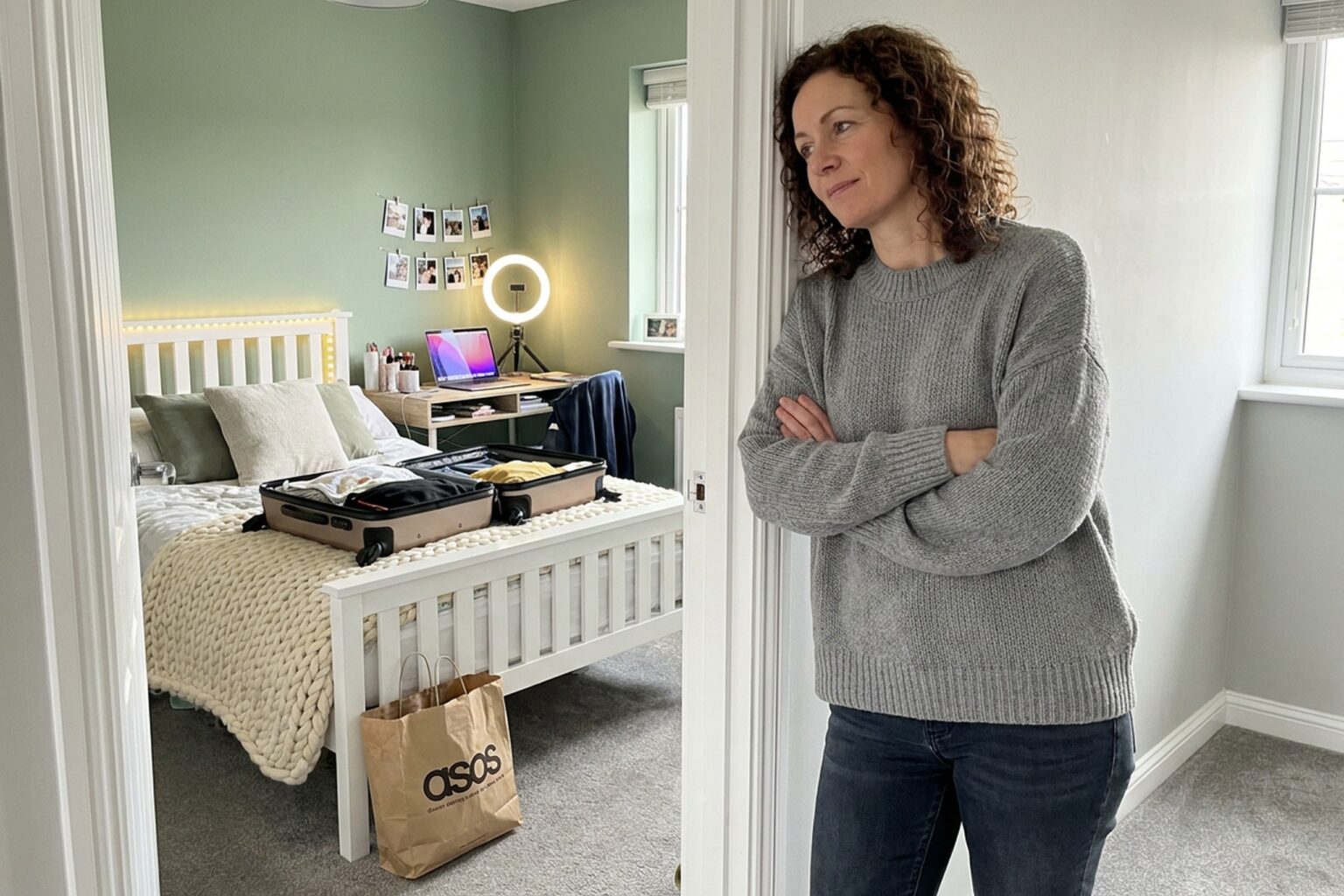
As a mum of four, I always knew our children would eventually begin leaving home. That is the whole idea: we raise them to become capable, independent people, while trying not to think too closely about how it will feel when they actually go.
We have already experienced one child leaving for university, and now another is approaching that point. The first departure changed the shape of our family; the next will change it again. Perhaps that is what I had not fully appreciated before this stage of parenting: there is no single moment when the family changes, followed by a neat period of adjustment. It keeps shifting.
This is not an empty nest, because younger children are still firmly at home. There are school runs, football training, homework and somebody asking what is for dinner before breakfast has been cleared away. Family life carries on at full speed, yet it feels unmistakably different.
You notice them most in the ordinary gaps
Before leaving, an older child may spend much of their time coming and going, making it easy to underestimate how much their departure will alter the household.
Then the background signs disappear: movement upstairs, a voice from another room and somebody arriving in the kitchen just as everything has been put away. The house may be calmer, but calm and complete are not the same.

The strange part is feeling proud and sad at once. Pride looks towards the life they are building, while sadness looks back to when everybody’s day ended beneath the same roof.
Younger siblings experience their own version of the loss
Conversations about university tend to focus on the student and the parents letting go, even though younger siblings’ lives change too.
They may have lost an ally, a lift or the person who understood the household from their side of the parent-child divide. Even siblings who argued constantly can miss knowing the other person was nearby.
The house may also be quieter, with more space and attention for those at home. Families can hold relief and loss at the same time.
That extra attention needs care, since a younger child should not feel responsible for filling the silence, softening a parent’s sadness or replacing the sibling who has gone.
Life at home keeps moving
The child at university encounters new people, routines and freedoms, while home continues with school timetables, weekend sport and familiar arguments. Messages provide snapshots, but cannot fully connect lives moving at different speeds.
The younger children keep growing, reaching milestones and creating family jokes the absent sibling does not understand. Meanwhile, another older child is preparing to leave, making the present feel both ordinary and temporary.
A household cannot remain frozen until the next holiday, and the difficult adjustment is accepting that a shared history no longer means sharing every ordinary day.
Coming home does not put everything back
The first returns carry plenty of expectations. Parents imagine everybody together again, siblings expect their old companion and the returning student may want little more than food, sleep and the freedom to stop explaining what they are doing.
They are familiar but changed, having managed their own time and built relationships beyond the family, while the household they return to has developed new routines because it had no choice but to carry on.
Nobody has replaced them, although their place no longer looks exactly as it did. Coming home becomes easier when it is treated as a relationship to renegotiate rather than a scene everyone must recreate.
Parenting begins to pull in opposite directions
Having children at different stages means spending part of the day holding on and another part letting go. One child may need help organising school equipment, another needs space to solve problems without a parent immediately stepping in, and another is beginning the gradual process of turning away from home towards whatever comes next.

It is a peculiar middle stage: still packing lunches while learning not to ask too many questions, and still managing bedtime while waiting for a late-night message from another city. The practical work continues, leaving little time to process one change before the next begins.
The next version of the family matters too
The family cannot be preserved exactly as it was, since that version belonged to a particular time, just as earlier versions involved cots, primary-school assemblies and car seats across the back row.
Connection now needs more intention. Siblings may need their own calls and messages, while photographs of ordinary moments help the person away remain part of home life without preventing the younger children from creating a life that is theirs.
New rituals begin to form: a favourite meal on the first night home, a regular call or the understanding that nobody has to perform constant closeness simply because everyone is together again.
When older children leave home, they do not take their place in the family with them. That place changes shape, while those still at home create what the household becomes next. With another departure ahead of us, I am aware that even the family dynamic we have only recently grown used to is temporary.
Perhaps this is what families are meant to do. They gather, expand, separate and return, never quite in the same form twice. Love becomes less dependent on shared walls, while home keeps learning how to hold everyone.
What changed most in your family when an older child left home—and what did the younger siblings notice first?
[…] family rituals cannot remove work, financial pressure, illness or competing schedules. They can, however, give a […]