
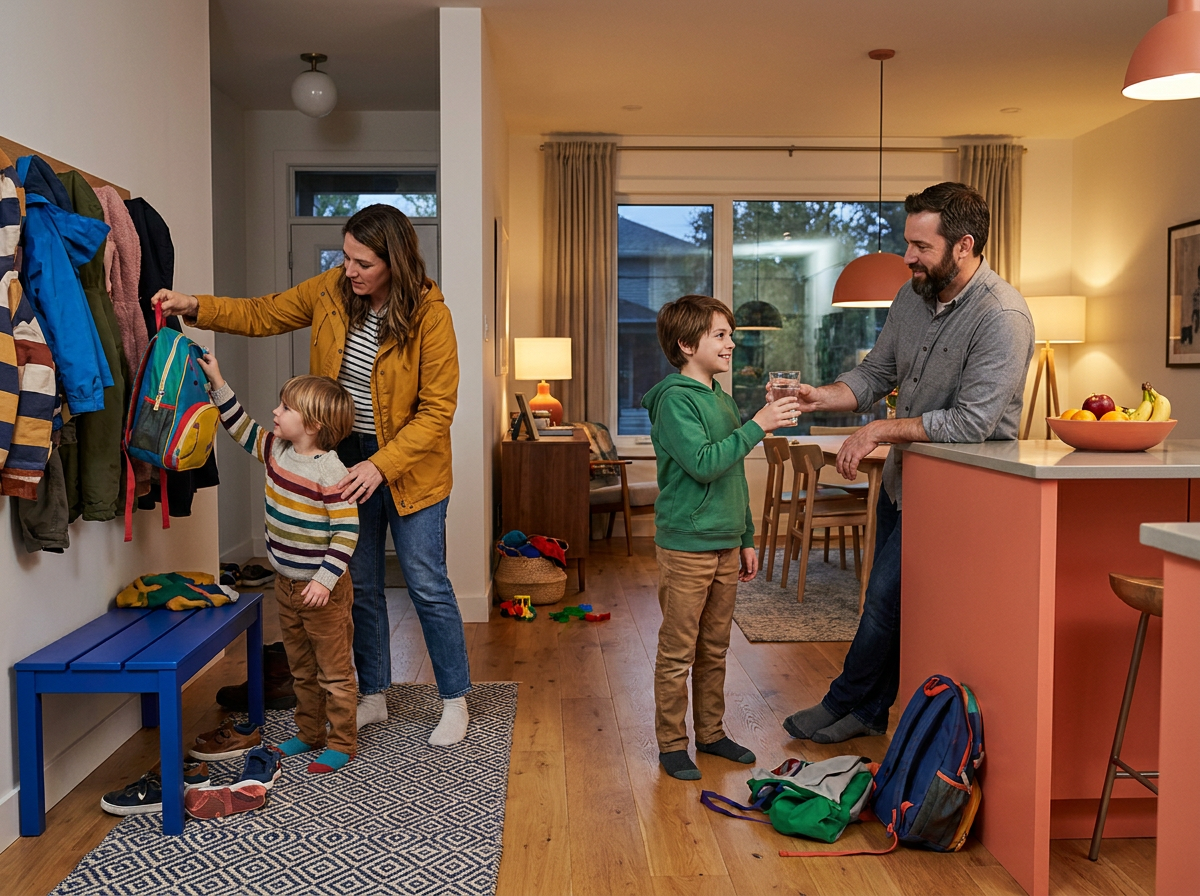
Most homes have a particular time of day when everything seems to come loose at once. Shoes are missing, somebody is hungry, a message from school needs answering and the person who has remembered the appointment is also trying to find the car keys. The problem is rarely a lack of care. It is that several people, needs and transitions are converging in the same small space.
Small family rituals cannot remove work, financial pressure, illness or competing schedules. They can, however, give a household a handful of dependable moments that do not need to be renegotiated every day. A familiar greeting after school, ten quiet minutes before bedtime or music while the kitchen is reset can become a kind of domestic punctuation: a signal that one part of the day is ending and another is beginning.
The useful distinction is between a ritual and a rigid routine. A routine tells a family what happens next. A ritual carries some shared meaning. It may be extremely ordinary, yet repetition gives it emotional weight. The aim is not to make home life run like a timetable; it is to create enough familiarity that people know where connection can be found.
Why Predictability Can Feel Calming
Children and adults use a great deal of mental energy anticipating what might happen next. Predictable points in the day reduce some of that uncertainty. According to UNICEF, structure can give children security and comfort because they understand what to expect and what is expected of them. The Center on the Developing Child at Harvard also emphasises the value of responsive relationships and reducing sources of stress within family life.
This does not mean every household needs fixed mealtimes, matching pyjamas or an elaborate bedtime sequence. Predictability can be relational rather than clock-based. A parent who always pauses to listen when a child arrives home provides a dependable response even when the time changes. A family that reconnects over a drink after everyone returns creates a pattern without demanding perfect attendance.
Rituals work partly because they move small decisions out of an already crowded moment. Nobody has to invent a way to reconnect every evening if there is an understood practice of putting phones aside during the first ten minutes of dinner. The reduction in decision-making benefits adults as much as children, particularly when attention is fragmented across employment, care, messages and household administration.

The Arrival-Home Ritual
The transition from school, work or childcare into home is often treated as though everybody should be immediately available to everybody else. One person wants to talk, another needs silence and somebody else needs practical help. A useful arrival ritual makes room for these different nervous systems instead of expecting instant harmony.
This might involve bags going in one place, drinks being poured and ten minutes in which nobody asks for a detailed account of the day. Some children talk most easily while eating; others need to decompress before conversation becomes possible. The ritual can be consistent while the response remains flexible: “You are home, nothing urgent is required for ten minutes, and there will be a chance to connect.”
Older children and teenagers may resist anything that feels staged. A plate of toast, a lift home without an interrogation or a shared joke can still become a ritual. Connection is not measured by how much information a young person produces on demand. Often, the steadiness lies in making the opportunity available without forcing it.
A Small Closing Ritual for the Kitchen
Kitchens collect evidence of the whole day: post, water bottles, crumbs, medication, permission slips and half-finished conversations. A short closing ritual can prevent that visual and mental residue greeting the family the following morning. Ten minutes is often enough to clear one surface, prepare breakfast items and decide what genuinely needs attention tomorrow.
The value comes from sharing the reset rather than silently assigning it to the person who already carries most of the household load. Younger children can return cups or wipe a low surface. Teenagers can load the dishwasher or prepare water bottles. The task should remain proportionate, yet participation communicates that the home is a shared system rather than a service delivered by one person.
Some evenings will be too full, and leaving the kitchen untouched may be the most sensible decision. A ritual should support the family rather than become another standard against which exhausted people fail. The useful question is whether the practice gives something back the following day.
A Bedtime Book Is Not Only for Small Children
The bedtime story is often presented as an early-years activity that children eventually outgrow. What many families lose at the same time is a reliable period of shared attention. Reading aloud can continue with older children through a chapter book, an interesting article, a puzzle or even a few pages of something funny.
Harvard’s work on “serve and return” interactions describes the developmental value of responsive back-and-forth exchanges between children and caring adults. The principle is broader than infancy. Shared attention creates openings for language, questions and emotional connection without requiring a formal conversation about feelings.
Where reading is not comfortable or appealing, the same function can be served by music, a short card game, stretching or making a warm drink together. The activity matters less than the reliable message underneath it: the day will not simply stop when the final task is completed; there is a moment in which the relationship is noticed.
Weekly Rituals Can Hold a Family Story
Daily practices are not the only source of steadiness. A Friday film, Saturday breakfast, Sunday call with a relative or monthly walk can create a longer family rhythm. These repetitions become part of how a household remembers itself, particularly during periods when work patterns, school demands or family circumstances are changing.
Tradition is often imagined as something inherited, elaborate and slightly formal. Families create traditions continually, sometimes without noticing. The same picnic eaten on the first warm weekend, pancakes after a difficult week or choosing music for a car journey can acquire meaning through repetition. A ritual does not need to be photogenic to become important.
When Rituals Become Another Source of Pressure
Any practice can become unhelpful when it is protected more fiercely than the people it is meant to serve. A child who is overwhelmed may need to skip the family meal. A parent working late may miss the usual bedtime. Separation, shift work, disability, neurodivergence and caring responsibilities all shape what repetition is realistic.
The best rituals have a recognisable centre and flexible edges. Dinner might mean eating together three evenings a week rather than seven. A bedtime connection might happen by voice note between homes. A weekly walk might become a drive and a flask on a low-energy day. Continuity is not the same as sameness.

Choosing One Ritual That Will Actually Last
Start with a pressure point rather than an idealised image of family life. If mornings feel frantic, prepare one shared element the night before. If everyone disappears into separate screens after dinner, create a brief point of reconnection before that happens. If Sundays are dominated by anxiety about Monday, choose a closing ritual that makes the next morning feel more prepared.
The practice should be small enough to survive a difficult week, visible enough that family members recognise it and shared enough that responsibility does not settle on one person. Asking children what already makes home feel comforting may reveal that the ritual exists; it simply has not been named.
A Steady Home Is Allowed to Move
Stability is sometimes mistaken for stillness. Family life is not still: children develop, jobs change, relationships shift and routines stop fitting. A steady home is one that can adapt without losing every point of recognition at once.
Small family rituals offer places to return to, not rules that hold everybody in position. Their value lies in the message repeated beneath the activity: this household notices its members, transitions are allowed to take time, and connection does not have to be invented from scratch every day.
Leave a Reply