The phrase “educational day out” can make an otherwise enthusiastic child deeply suspicious. It suggests clipboards, worthy explanations and an adult waiting to ask what has been learned. Families may want experiences that broaden children’s worlds, yet nobody wants every weekend converted into an extension of the school day.
The best educational days out in North Wales solve this tension by being interesting before they are instructive. A castle invites children to climb before it raises questions about power. A steam railway offers a journey before it reveals a story of landscape and industry. An aquarium begins with the movement of an octopus or jellyfish, then opens a route into habitats, conservation and the life beneath the nearby sea.
North Wales is particularly good at this kind of accidental learning because its stories remain visible in the landscape. Mountains carry the marks of mining, railways follow the routes of slate, castles still dominate towns and engineering crosses valleys in plain sight. The following places work for different ages and interests, with enough substance to reward adults as well as children.
1. Xplore! Science Discovery Centre, Wrexham
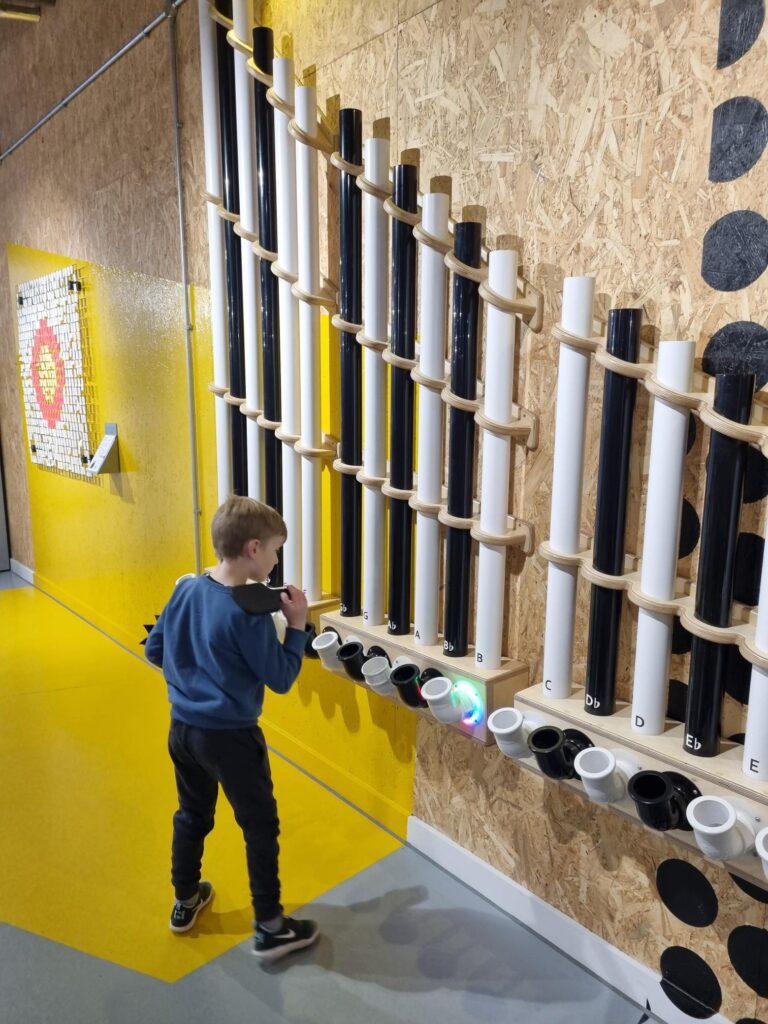
Xplore! is the clearest choice for children who understand an idea by touching, testing and changing something. The Wrexham centre describes itself as the home of science in North Wales and contains more than 80 interactive exhibits, alongside live science shows on changing themes. The experience is built around participation rather than rows of objects behind glass.
The learning sits inside the action. Children encounter forces, light, sound, electricity, movement and the human body while trying to make an exhibit respond. An adult does not need to explain every principle. Asking what changed, what was surprising or whether a different approach might work keeps ownership with the child.
This is also a useful wet-weather option and can suit families whose children have very different interests. Check the session times, show schedule, accessibility information and current prices before travelling, since opening arrangements can change during term time and holidays.
2. Pontcysyllte Aqueduct and Canal World Heritage Site
Pontcysyllte makes engineering impossible to treat as an abstract subject. The canal crosses high above the Dee Valley in a cast-iron trough supported by stone piers, creating a structure that can be experienced on foot or by boat. The wider World Heritage Site covers 11 miles of canal, aqueducts, tunnels, viaducts and countryside across the Welsh-English border.
Children do not need a prepared lesson on Thomas Telford to appreciate the central problem: how do people carry a canal across a valley? Looking at the water, iron, masonry and height gives the question a physical scale. A boat trip can make the feat even more memorable, while a towpath walk offers a free or lower-cost way to explore part of the site.
Height will be a genuine consideration for some visitors. Families should check the chosen route, parking and access arrangements beforehand, particularly with younger children, mobility needs or anybody uncomfortable with exposed edges. The site becomes more enjoyable when nobody is being pushed through fear in the name of an experience.
3. RSPB Conwy Nature Reserve
RSPB Conwy demonstrates that wildlife watching does not depend on already knowing the names of birds. The reserve has mainly flat trails over surfaces including rolled slate and boardwalk, with family maps, hides, viewing points and benches. Its short Blue Tit Trail runs through reedbed and wildlife garden, making a manageable starting point for younger children or a mixed-energy group.
The most valuable learning here is attention. Movement in reeds, changes in sound and the difference between feeding, resting and alarm behaviour reward patience without requiring a formal activity. Binoculars can help, but they are not essential. One shared question—what is the animal doing?—often creates a richer conversation than racing through a long identification list.
Accessibility information is unusually practical, including details about surfaces, gates and viewing-slot heights. Weather and wildlife remain unpredictable, which is part of the point. A visit in which the hoped-for bird never appears can still teach observation, uncertainty and respect for a place that does not perform on demand.
4. Conwy Castle and the Town Walls
Conwy Castle provides the scale and drama that can make history feel immediate. Towers, passages, views and the relationship between the fortress and walled town encourage questions about defence, status, labour and who controlled the landscape. Cadw identifies Conwy as one of the great castles constructed for Edward I, forming part of a World Heritage Site with Beaumaris, Caernarfon and Harlech.
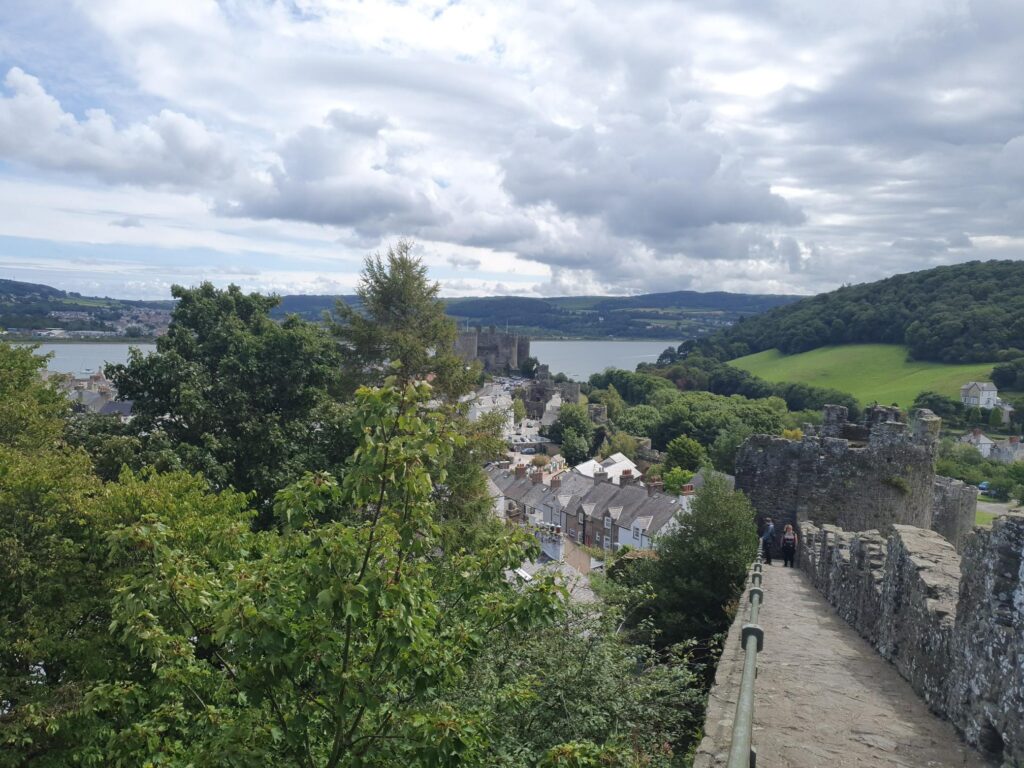
A balanced family conversation should go beyond admiring the architecture. These buildings are extraordinary engineering achievements, but they also belong to a history of conquest and power. Older children may be interested in whose version of the story appears in a castle, how the Welsh population experienced its construction and why monuments can be both impressive and politically complicated.
Conwy works particularly well because the history continues outside the ticketed site. The town walls, street plan and nearby Plas Mawr extend the story into an ordinary town. Check current Cadw prices and access notices before visiting; steep stairs, narrow passages and uneven surfaces may shape how much of the castle is suitable for individual family members.
5. Ffestiniog and Welsh Highland Railways
A heritage railway has an obvious advantage over many museums: the main exhibit moves. The Ffestiniog Railway travels roughly 13½ miles between Porthmadog and Blaenau Ffestiniog, climbing from the coast into the mountains. Together, the Ffestiniog and Welsh Highland Railways stretch for 40 miles through Eryri and connect communities shaped by tourism, engineering and the slate industry.
Children can simply enjoy the locomotive, tunnels, bends and changing view. The route also makes it possible to see why narrow-gauge railways suited difficult terrain and how slate moved from inland quarries towards a port. Questions about gradient, steam, braking and track design arise from what is happening outside the window rather than from an imposed explanation.
Rail journeys can be expensive for a family, so compare routes and journey lengths rather than assuming the longest option will offer the best experience. Some children will happily spend most of a day on a train; others may enjoy a shorter return journey with time to explore at one end. Booking and timetable checks are essential because services vary seasonally.
6. Anglesey Sea Zoo, Brynsiencyn
Anglesey Sea Zoo concentrates on British marine life rather than filling tanks with species from around the world. Its displays include creatures found around the UK coast, such as octopuses, lobsters, seahorses, conger eels and jellyfish. The aquarium also explains marine habitats and the research and conservation work connected with them.
The local focus changes the conversation. Children can leave knowing that striking animals do not only live in tropical oceans; complex habitats exist around the coastline they may have passed that morning. The lobster hatchery and seahorse nursery provide a visible link between animal care, research and conservation rather than treating wildlife as decoration.
Aquariums raise reasonable questions about captivity and animal welfare. Families can use the visit to ask why a species is kept, what conservation activity the organisation undertakes and how local choices affect the sea. Current opening days, feeding or talk times and admission prices should be checked directly before travelling.
7. GreenWood Family Park, Y Felinheli
GreenWood appears to be a straightforward theme-park day, which is precisely why its educational possibilities do not feel forced. The woodland setting includes active play and rides, while the park’s energy systems create a practical route into sustainability and design. GreenWood states that it is powered entirely by renewable energy, with its solar array supplying most of the park’s needs.
SolarSplash is described as the UK’s first solar-powered ride, while the Green Dragon uses people power as part of its operation. Children experience energy transfer, gravity and renewable generation as something that creates fun. An adult can draw attention to where the energy comes from without turning the queue into a physics seminar.
The park will suit families who want movement and adventure more than quiet interpretation. Height restrictions, seasonal opening, weather and the different physical demands of activities should be checked in advance. Its strongest lesson may be that environmental design is not confined to earnest displays; it can shape the machinery of play.
8. Great Orme Mines, Llandudno
Great Orme Mines takes visitors underground into passages created by prehistoric copper miners. The current self-guided experience takes around 45 minutes and includes an introductory film, roughly 200 metres underground, surface excavations, a smelting shelter and the opencast mine. The route gives children a direct sense of the physical conditions behind the metal objects seen in museums.
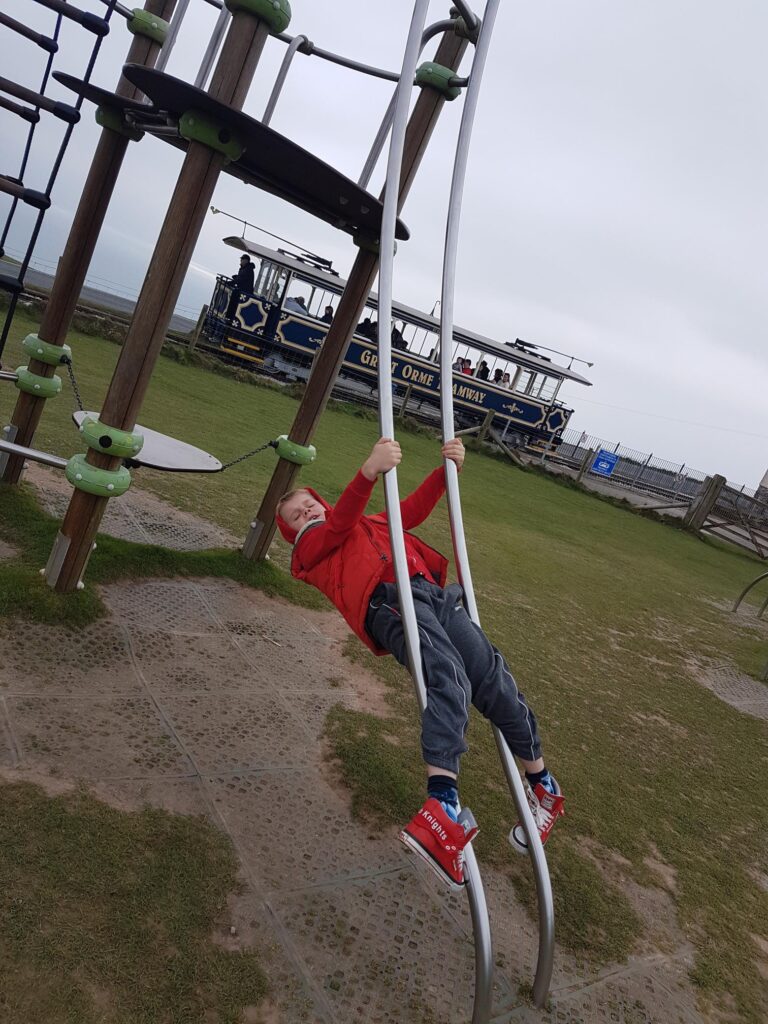
The richest questions connect technology with human effort. How was rock broken before modern machinery? How did miners see, breathe and move underground? Why was copper valuable enough to justify this work? Stone tools, mineral colour and the process of turning ore into metal make the Bronze Age feel inventive rather than simply distant.
This is not an accessible option for every family. The official visitor information describes stairs, slopes, uneven wet ground and underground temperatures of approximately 5°C to 8°C. Warm clothing and sensible footwear are needed even in summer, and families should assess claustrophobia, mobility and sensory needs before booking.
How to Keep the Day From Feeling Like School
The attraction supplies the material; the family atmosphere determines how it is experienced. Children do not need to read every panel, complete every trail or recall facts in the car afterwards. Different family members can be drawn to different parts of the same place, and the person who races through the exhibition may still have noticed something important.
One or two genuine questions are enough. “What surprised you?” is often easier than “What did you learn?” Allow photographs, sketches, collecting permitted objects or physical play to count as ways of engaging. Food, rest, noise and pace also matter. A hungry or overwhelmed child is not refusing enrichment; their body may simply have reached its limit.
The age labels attached to attractions are only a starting point. A mechanically minded teenager may love the railway, while a younger child may spend an hour watching jellyfish. A family day becomes more inclusive when interest and access shape the plan more than an imagined idea of what children at a particular age ought to enjoy.
Choosing the Right North Wales Day Out
Choose Xplore! for hands-on indoor science, RSPB Conwy for a flexible and comparatively gentle outdoor visit, and Anglesey Sea Zoo for children fascinated by living creatures. Pontcysyllte and the railways suit engineering minds, while Conwy Castle and Great Orme Mines make history physical. GreenWood works when the family needs active fun with learning sitting quietly underneath it.
Location matters in North Wales. Travel times can be longer than the map suggests, particularly in holiday traffic or across mountainous routes. Building a day around one main attraction and a nearby beach, walk or town is usually more enjoyable than attempting to collect several experiences before closing time.
Educational days out in North Wales work best when nobody is required to prove their educational value. The learning is already present in the stone, water, machinery, animals and landscape. A family only needs enough time and freedom to notice it.
Leave a Reply