

A child pauses beside a drain to watch rainwater disappear. An adult is already thinking ahead: explain gravity, find a video, order a science kit, and turn it into something educational. The instinct is generous. Parents want to notice an interest and help it grow. Yet curiosity can disappear under the weight of adult enthusiasm surprisingly quickly.
Keeping curiosity alive does not mean producing more lessons at home. It means protecting the conditions in which a child wants to look again, ask another question or try something without already knowing where it will lead. Adults matter enormously, although their most useful role is often to notice, respond and make space rather than immediately take control.
This is particularly important when children already spend much of the week moving between objectives, instructions and assessment. Home can extend learning without copying school. A conversation in the car, a broken appliance, a recipe that goes wrong or an unexplained insect on the wall can all support thought precisely because nobody has prepared a worksheet about them.
Curiosity Is Not the Same as Being Entertained
Entertainment supplies stimulation. Curiosity creates a gap between what somebody knows and what they want to understand. Children can be highly entertained without wondering about anything, just as they can become absorbed by a cardboard box, a repetitive game or an apparently unremarkable question.
The distinction matters because adults often respond to boredom by adding content. Another activity, subscription or organised experience may help, but constant provision can teach children to wait for interest to arrive from outside. Curiosity also needs unclaimed time in which the mind can wander, reject an idea and return to it later.
Boredom is not always comfortable, and it should not be romanticised when a child is lonely, anxious or lacks access to play. It can still be useful to pause before solving it. “What do you feel like doing?” opens a different door from “Here is an educational activity.”
Follow the Question Before Supplying the Answer
Adults are rewarded for knowing. Children quickly learn that a question can become a shortcut to an adult explanation, after which the subject is considered complete. A more curiosity-friendly response is to remain with the question for a little longer: “What do you think is happening?” or “What did you notice that made you wonder?”
This is not a test disguised as conversation. The adult does not need to steer the child towards the correct vocabulary or praise an answer for sounding clever. The purpose is to discover how the child is thinking. An unexpected theory may reveal more than a polished fact copied from a search result.
Questions should not become relentless either. Some children experience repeated adult questioning as pressure, particularly after a demanding school day. A simple observation—“That wheel is moving differently from the others”—can invite attention without requiring a performance.
Let Interests Stay Small
A brief interest does not have to become a project. A child who asks about the moon may want one answer, not a telescope, a display board and a month of space-themed activities. Respecting the size of an interest tells children that their questions belong to them.
Adults can offer a next step without attaching an obligation: leave a relevant book nearby, suggest looking again tomorrow or mention a place where the idea could be explored. The child is then free to continue or move on. Abandoned interests are not failed learning; they are part of discovering what holds attention.
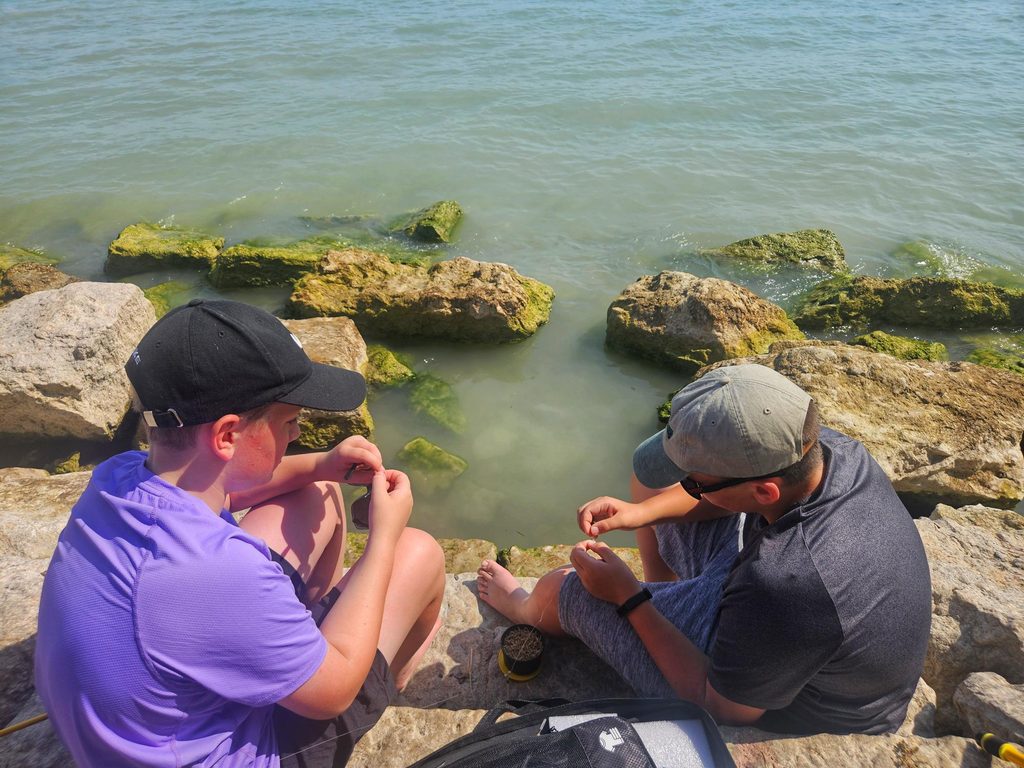
This restraint also protects family resources. Curiosity should not depend on parents buying specialist kits or arranging enriching experiences every weekend. Libraries, charity shops, household objects, public spaces and conversation provide more than enough material for serious thinking.
I recall these moments from my own childhood. When I got more information or more of an explanation than I perhaps wanted. I also know I have done this as a parent myself. I really have to check myself. I have never had an issue with saying to my children, “I don’t actually know; let’s find out” – but I have certainly found it tricky at times not to tell them everything I know about other things.
Allow Children to See Adults Not Knowing
Many adults feel they should answer immediately, particularly when information is available within seconds. Saying “I don’t know” can be more powerful when it is followed by genuine interest. It shows that knowledge is not a performance and uncertainty is not embarrassing.
Looking something up together is useful when the search follows a real question. Comparing two explanations, checking who produced the information and noticing when a source is unclear also develops the judgement children need in an information-rich world. The skill is not simply finding an answer; it is deciding what deserves confidence.
Sometimes the answer can wait. Predicting what will happen, observing for longer or asking another person preserves the experience of inquiry. Instant information is efficient, but efficiency is not always the friend of curiosity.
Make Room for Making, Taking Apart and Getting It Wrong
Curiosity is physical as well as verbal. Children investigate by moving, collecting, building, mixing, dismantling and repeating. A household that only values neat finished products can unintentionally close down these forms of thought.
This does not require tolerating chaos everywhere. A tray for experiments, a drawer of safe discarded objects or a particular surface for ongoing constructions creates a boundary without insisting that every exploration be completed and cleared within an hour. Older children may need tools, cooking ingredients, software or space to repair something rather than a craft cupboard.
Mistakes are most useful when adults resist rescuing too quickly. Practical help may be necessary for safety or frustration, yet solving every problem removes the point at which a child has to adjust an idea. “What could you change?” leaves ownership in a different place from “Here is how to do it.”
Curiosity Changes as Children Grow
Young children announce their questions. Teenagers may pursue interests privately, through videos, music, sport, fashion, gaming, online communities or conversations with friends. Adults can miss this because it does not resemble the visible curiosity of childhood.
Showing interest without interrogation is important. Asking a teenager to explain every detail can turn enjoyment into a presentation. A lighter invitation—“What is it you like about that?”—allows them to decide how much to share. Respect for expertise also matters; a young person may genuinely know more than the adult.
Families should remain alert to safety and the quality of online information, although supervision need not communicate contempt for the interest itself. The route into coding, design, storytelling, music production or entrepreneurship may look like screen time before its depth becomes visible.
What Research Suggests About Responsive Learning
The Education Endowment Foundation describes cultures that support curiosity, thinking and problem-solving as part of strong early learning. Its guidance also emphasises high-quality interaction rather than activity for activity’s sake. Harvard’s work on responsive “serve and return” exchanges similarly highlights the value of adults noticing a child’s focus and responding to it.
These ideas point towards a relationship, not a programme. Curiosity is supported when children experience their attention as worth following and their ideas as worth hearing. Adult knowledge can extend the exploration, but it should not erase the child’s route into it.
Keeping Curiosity Alive in Ordinary Family Life
A curiosity-rich home may look surprisingly ordinary. People wonder aloud, books are used rather than displayed, mistakes are discussed without humiliation and interests are allowed to come and go. Children see adults learn things for reasons that are not connected to qualifications or productivity.
The most helpful question may be whether a child still owns the exploration. If the adult has chosen the outcome, gathered the materials, directed every step and evaluated the result, curiosity has probably become compliance. Stepping back is not a withdrawal of support. It can be the clearest sign that the child’s mind is trusted.
Leave a Reply