
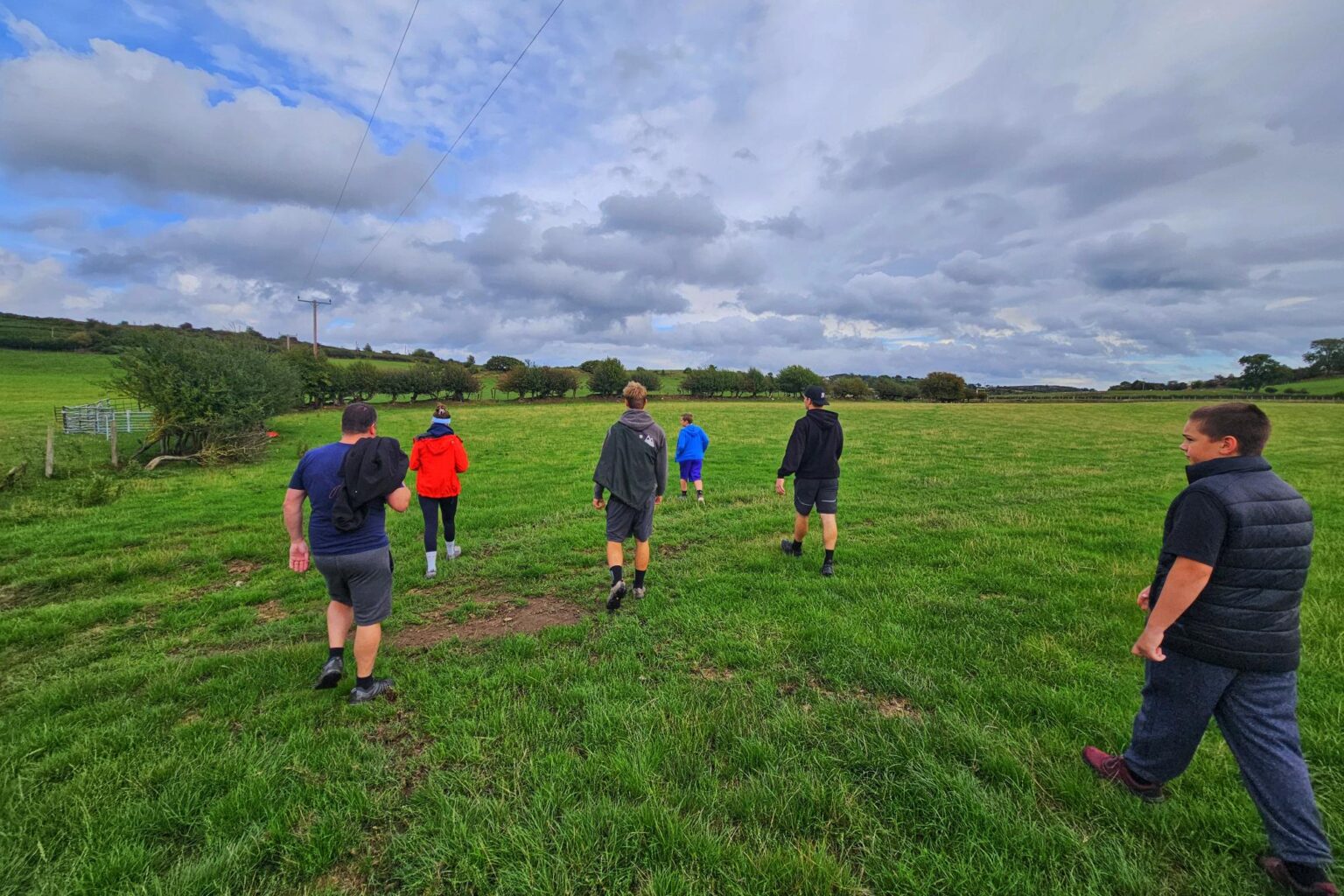
Weekends can become strangely narrow. Shopping, sport, laundry, homework and the preparation for Monday absorb the available space, while the idea of “doing something” starts to sound like another piece of administration. A worthwhile change of scene appears to require tickets, driving, research and a bag packed for every possible outcome.
A local family walk offers something quieter. It does not compete with a major day out, and it does not need to be sold to children as an improving experience. Its value lies in changing the scale of attention. A path passed hundreds of times can feel different when nobody is rushing through it to reach somewhere else.
The most successful local walk is not necessarily the prettiest or longest. It is the one that gives the family a reason to leave the usual route and enough freedom to notice what happens next. A small destination, an unfamiliar turning or a question can make a nearby place feel wider than its mileage suggests.
Why Nearby Places Are Easy to Stop Seeing
Familiarity is efficient. The brain learns which details can be ignored, allowing people to move through known streets without examining every gate, tree or change in level. This is useful on a school run, but it also means the local area can become visually flat.
Travel naturally interrupts this filtering. People look at signs, buildings, plants and views because they do not yet know what matters. A local walk can borrow the same quality of attention by introducing a purpose that is slightly different from getting from A to B.
The purpose need not be educational. Finding the highest point, following a stream, locating a bridge, photographing five different doors or choosing the next turning by coin toss changes how the route is experienced. Attention expands when the outcome is not entirely known.
Give the Walk a Small Destination
“Would you like to go for a walk?” is not always an appealing proposition, particularly to a child who hears only effort without a reason. A modest destination gives the outing shape: a bakery, a bench with a view, a library, a football wall, a tiny patch of woodland or somewhere to drink hot chocolate from a flask.
The destination should support the walk rather than dominate it. An expensive treat every time can turn the outing into a transaction, while an ambitious endpoint may create pressure to keep moving when somebody is tired. Simple rituals work well: share a snack at the halfway point, choose a song for the return or stop at the same tree to check what has changed.
Children can choose destinations too. Their priorities may appear unimpressive to adults—an alley, a construction site, a particular dog or a place where echoes work—but ownership changes the energy of the outing. The adult remains responsible for safety, while the child contributes direction.
Let Somebody Else Lead
Family walks often reproduce the household’s usual power structure. One adult chooses the route, pace and stopping points while everyone else is expected to cooperate. Letting a child or teenager lead part of the way introduces uncertainty and communicates trust.
Leadership can be bounded: choose between two safe paths, navigate to a landmark or decide where the group pauses. Younger children may lead for five minutes; older children can use a paper map or phone mapping app. The point is not testing navigation but allowing the outing to be shaped by more than one person.
Different bodies and energy levels need to remain part of the decision. A route that gives one person freedom should not quietly exclude another. Pushchairs, wheelchairs, pain, sensory needs and fatigue all influence what “local and easy” actually means. Adaptation is part of family exploration, not a lesser version of it.
Use a Question Instead of a Checklist
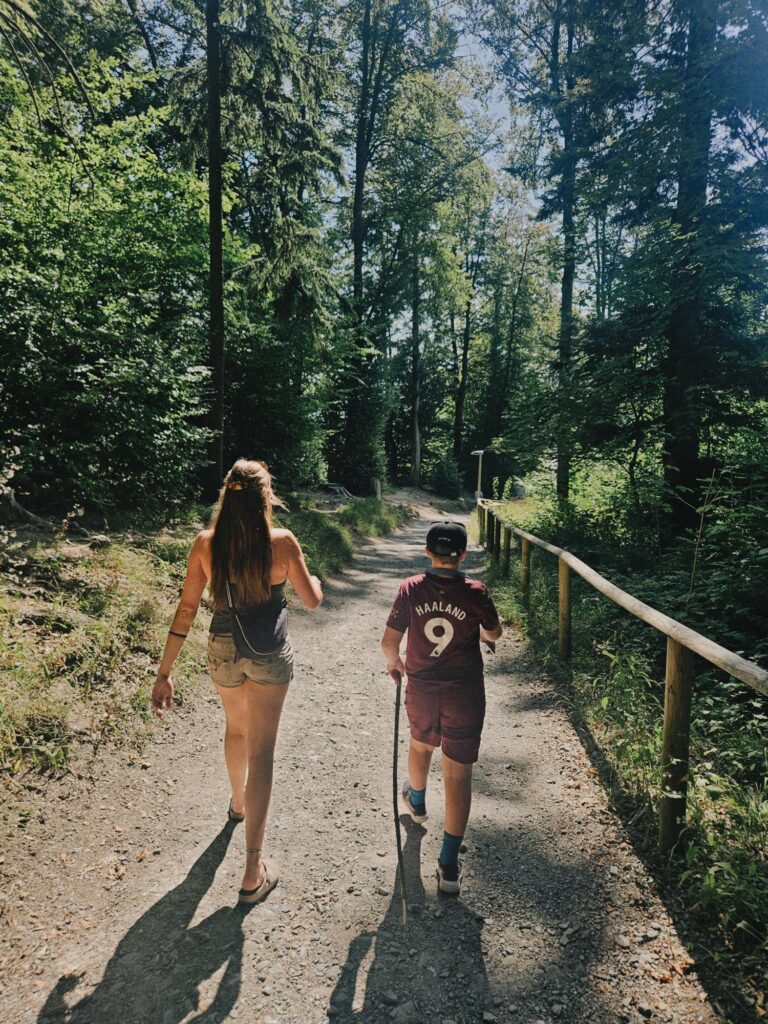
Scavenger hunts can be enjoyable, but long lists sometimes pull attention away from the place and towards task completion. One open question leaves more room: Where does the water go? Which building looks oldest? What can be heard when traffic fades? Where would an animal shelter here?
Questions give conversation somewhere to begin without demanding it. Children may ignore the prompt and become interested in something else, which is not a failure. The walk has worked if attention has moved outward and the route has created space for shared noticing.
Photography can support this when it slows observation rather than replacing it. Each person might take one image of something they would normally pass. Comparing the choices later reveals how differently family members experience the same place.
Notice the Edges of the Map
The most interesting local spaces often sit between named attractions: a footpath behind an estate, a community orchard, a churchyard, a canal cutting, a disused railway line or the strip where a housing development meets fields. These edges reveal how a place works and changes.
Public rights-of-way maps, council walking pages, local history groups and libraries can reveal routes that are not obvious from the road. Families should check access, weather, livestock guidance and path conditions, particularly where a route crosses farmland or becomes remote.
Exploration should not depend on nature looking spectacular. Urban routes offer shop signs, architecture, street art, transport, gardens, sounds and traces of earlier uses. A city block can support close attention just as effectively as a woodland path.
Why Nature Close to Home Matters
Natural England’s People and Nature work examines how children and adults experience the natural environment, while its recent reporting emphasises that everyday access to nearby nature supports physical and mental wellbeing. The important word is nearby. Benefits should not depend entirely on families having the money, transport or time to reach celebrated landscapes.
A local walk can also strengthen connection to place. Seasonal change becomes visible when the same hedge, river or tree is visited repeatedly. People are more likely to notice litter, habitat loss, new planting and community effort when a landscape is part of ordinary life rather than a backdrop consumed during a single visit.
Nature is not equally accessible, and some local spaces feel unsafe, poorly maintained or hostile to particular users. Families should not be told to solve structural inequality by walking more. Councils, developers and public bodies have a responsibility to provide safe, inclusive routes and good-quality green space.
Allow the Walk to Be Short
A walk does not have to achieve a distance, step count or fitness target to be worthwhile. Small children may spend twenty minutes covering a few hundred metres. Teenagers may talk more during a brief loop after dark than on a planned afternoon hike. Someone recovering from illness may need a bench to be the destination.
Removing performance changes the atmosphere. There is no failed walk if the family turns back, changes route or stops to watch something. Movement still matters, but the outing can support relationships and attention without becoming another measure of productivity.

Let the Walk Alter the Weekend
The phrase “we didn’t do much” often hides a weekend full of maintenance. A local walk creates a boundary in that work. Leaving the house together, even briefly, changes the day’s shape and produces a shared reference point that is not a task.
The return matters too. Mark the route on a map, pin one photograph, look up a building or decide which turning remains unexplored. These small acts allow the place to accumulate meaning over time.
A wider weekend is not necessarily busier. It may contain one hour in which attention is not being pulled towards the next obligation. The local family walk offers that possibility close to home: not an escape from ordinary life, but a way of seeing that ordinary life contains more territory than the usual route reveals.
Leave a Reply