
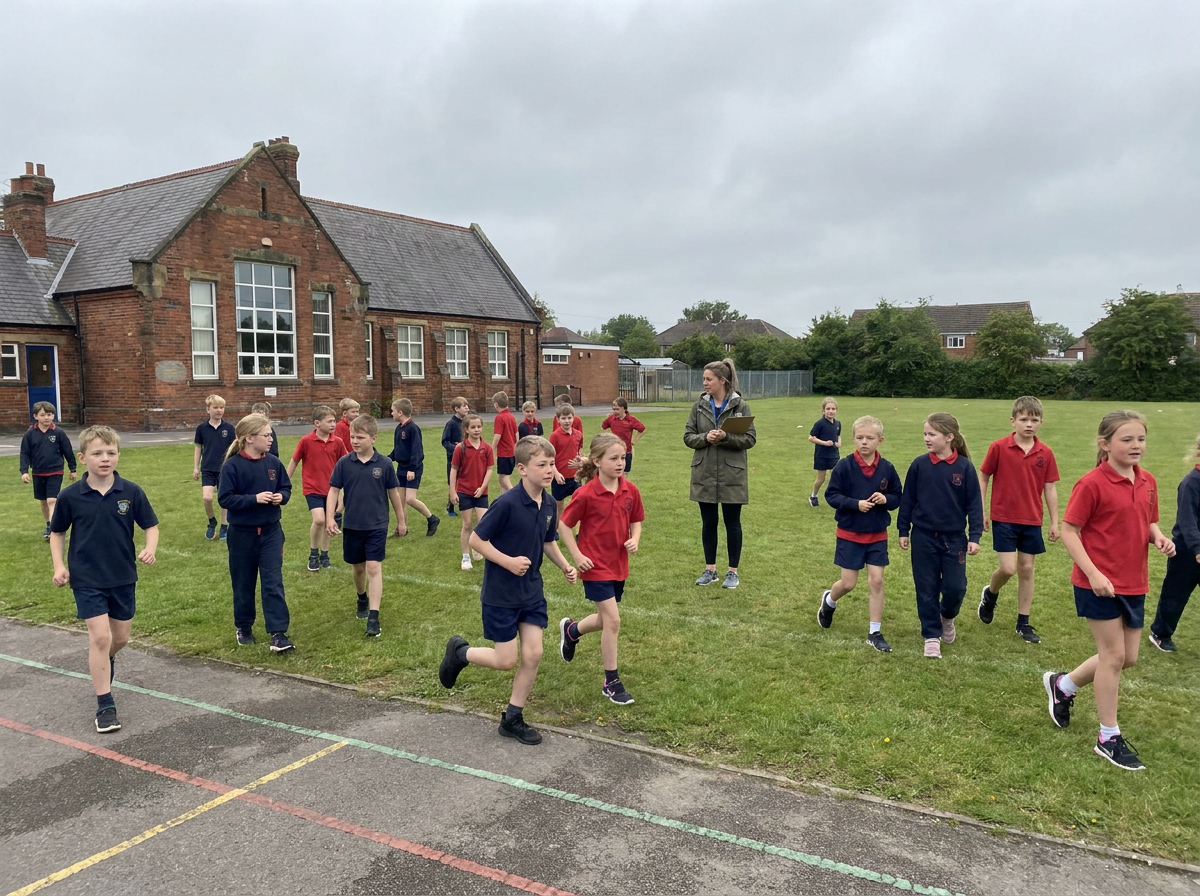
What our school timetables reveal about how we value children’s learning
Schools talk about children’s wellbeing more openly than ever before. Mental health, resilience, healthy lifestyles and emotional regulation have all become part of everyday conversations about education. Children are encouraged to walk or cycle to school, take part in sport and understand why movement matters.
These are positive changes. They reflect a growing awareness that education is about more than examination results and that children cannot learn well if their wider needs are consistently overlooked. Yet there is an interesting contradiction hidden within many school timetables.
A production needs another rehearsal. A visiting author is coming in. Christmas performances are approaching, or an assembly has overrun. Schools are busy places, and unexpected changes are part of everyday life.
The question is not why timetables sometimes need to change. It is why physical education so often appears to be the lesson expected to make room. Is this a pattern you have seen too?
The subject that can wait
Few schools would suggest that PE does not matter. Sporting achievements are celebrated, teams are encouraged and pupils are regularly reminded about the benefits of an active life.
Even so, physical education often seems to occupy a different position from subjects such as English, maths and science. Those lessons are generally viewed as essential, while PE can feel slightly more negotiable. If something has to be rearranged, it can always happen next week.
Perhaps this reflects an understanding of learning that has been with us for generations. Serious learning happens at a desk, while physical activity supports health, enjoyment and fitness. Both have value, although only one is seen as central to a child’s education. That distinction becomes harder to maintain as we learn more about the connection between movement and the brain.
Learning involves the whole child
Children do not arrive in the classroom as minds separated from bodies. Their ability to concentrate, remember instructions, manage frustration and ignore distractions is affected by how they feel physically and emotionally.
According to the World Health Organization, regular physical activity supports children’s cognitive development alongside their physical and mental health. A WHO review also found that increasing opportunities for movement at school could improve academic achievement rather than taking something away from it.
Research from the Education Endowment Foundation also suggests that physical activity can support academic attainment, alongside its wider benefits for children’s health and wellbeing. Perhaps the more important point is that time spent moving is not time lost from education. Giving children opportunities to be active may help them return to the classroom more ready to concentrate, participate and learn.
Many families will recognise the connection in ordinary life. A child who has spent most of the day sitting may come home restless, irritable or unable to settle. Time outside, a walk, a swim or simply an opportunity to run around can change the atmosphere of an entire evening. Movement is not always a break from what children need to do. Sometimes it is what allows them to do it.
Physical education is about more than sport
PE is often associated with team games, competition and children who are naturally athletic. That can make it easy to overlook the quieter role it plays in helping children understand their own bodies.
A broad physical education curriculum can introduce pupils to swimming, dance, gymnastics, athletics, outdoor activities and different forms of individual challenge. It can help them develop coordination, balance, confidence and an understanding of how movement feels.
Not every child will enjoy football, netball or running races. Some feel uncomfortable being watched, worry about being chosen last or decide at a young age that they are simply not sporty. Others may need more time, different activities or a less competitive environment before they find a form of movement they enjoy.
According to Sport England, enjoyment, confidence, competence, understanding and knowledge all influence a child’s relationship with physical activity. Positive experiences can make children more likely to remain active, while repeated experiences of embarrassment or failure may stay with them for years.
Perhaps the purpose of PE is not to turn every child into a sports player. It may be to help every child discover that movement belongs to them too – not just the sports stars!
When school movement disappears
When a PE lesson is cancelled, it may seem like a relatively small change to the week. For some children, however, school provides their most reliable opportunity to be active.
Families do not all have the same access to gardens, parks, transport, clubs or leisure facilities. Swimming lessons and organised sport cost money, while after-school activities have to fit around work, caring responsibilities, homework and the needs of other children.
Some families can replace a lost PE lesson without giving it much thought. Others cannot, particularly when local opportunities are limited or a child needs additional support to participate.
The responsibility for keeping children active does not disappear when movement is reduced at school. It simply shifts elsewhere, often into family life.
This does not mean schools should carry the entire responsibility for children’s physical activity. It does suggest that PE offers something particularly valuable: an opportunity that is available to children regardless of what their family can organise or afford beyond the school gates.
Movement as a consequence
The place of physical activity within education becomes particularly interesting when PE or breaktime is removed because of poor behaviour.
Schools need boundaries and consequences. Teachers must be able to teach, pupils need to feel safe and children need to understand that their behaviour affects other people. The question is whether removing movement is always the most helpful response.
If a child behaved poorly in PE, preventing them from attending mathematics the following day would seem an unusual consequence. Yet removing PE because of behaviour in another lesson is familiar enough that it may pass without much discussion. This feels odd.
This matters when movement can support attention, emotional regulation and self-control. A child who is struggling with those things may lose one of the parts of the day that could help them manage more successfully.
The issue is not whether actions should have consequences. It is whether the consequence works with what we understand about children rather than against it.
What the timetable quietly teaches
Schools teach children much more than the content of individual subjects. Everyday decisions also communicate which activities are protected, which achievements are valued and which experiences can be set aside when something else appears more urgent.
Children may be told that physical activity is essential for a healthy life while noticing that PE is regularly the easiest lesson to replace. Neither message is necessarily deliberate, yet both contribute to their understanding of what really matters.
Schools face pressures that are not always visible to families. Timetables are crowded, expectations continue to grow and teachers are often trying to meet several equally reasonable needs at once. No subject can be completely protected from the unpredictability of school life.
Even so, the compromises made most often can reveal assumptions that have gone largely unexamined. PE may not be sacrificed because schools believe it has no value. It may be sacrificed because movement is still seen as something that sits beside learning rather than something that helps make learning possible.
A different way of looking at PE
The conversation about physical education is not really about whether PE matters more than English, maths or science. Children need a broad education, and schools will always have difficult decisions to make about how limited time is used.
Perhaps the more useful question is what we believe learning looks like. If it is understood mainly as time spent sitting, listening and producing written work, physical education will always seem easier to lose. If learning involves attention, confidence, emotional regulation, physical development and a growing understanding of oneself, PE begins to occupy a different place.
The lessons children remember are not always those adults expect. They learn from what schools teach but also from what schools celebrate, prioritise and repeatedly protect.
Physical education does not need to be placed above every other subject. Perhaps it simply needs to stop being treated as though it sits beneath them all.
Leave a Reply