
There are certain household jobs that never really feel finished, no matter how much time you spend doing them, and laundry has to be somewhere near the top of that list. You can spend an entire Sunday washing, drying, folding and putting clothes away, only to discover that the laundry basket is already filling up again before Monday morning has even arrived. Add children into the equation, particularly those involved in sport or outdoor activities, and keeping on top of the washing can start to feel like a logistical operation requiring its own timetable.
The washing itself is only part of the problem, of course. There is the sorting, checking pockets, treating stains, finding somewhere to dry everything, remembering which items can’t go in the tumble dryer and attempting to reunite socks with their missing partners. Somewhere in the middle of all this, someone will inevitably announce that they need a particular item of clothing for the following morning, despite having known about it for approximately three weeks.
While there is no magical solution to the endless cycle of family laundry, there are ways to make the whole process more manageable. Some involve changing household habits, others are about getting everyone to take a little more responsibility, and a few come down to choosing products that make everyday tasks less cumbersome.
Why family laundry becomes such a big job
One of the reasons laundry can feel overwhelming is that it involves considerably more than simply putting clothes into a washing machine. A single load might only take a couple of minutes to prepare, but the time involved in sorting, transferring, drying, folding and distributing everything around the house soon adds up, particularly when several loads are needed each week. My least favourite household chore is sorting washing and putting it away!
Children’s activities can make the situation even more demanding. Swimming lessons generate wet towels and costumes, football training produces muddy kits, and things that require stain treatments, school requires a steady supply of clean uniforms and teenagers can get through an astonishing number of clothes without appearing to have worn most of them for very long.
The problem is compounded by the fact that laundry is rarely something families can tackle entirely at their convenience. School uniforms are needed on particular days, sports kits have to be ready for training, and bedding or towels sometimes need washing immediately rather than waiting for the next convenient laundry day.
It is hardly surprising that washing becomes one of those background household responsibilities that occupies far more mental space than anyone would like. Even when the machine is doing most of the physical work, somebody still has to remember what needs washing, when it needs to be ready and whether there is enough detergent left to get through the week.
Finding ways to reduce that constant mental juggling can make a bigger difference than simply trying to wash clothes more quickly.
Making the laundry routine work around family life
The traditional approach of saving all the washing for one particular day might work well for some households, but it can be less successful when there are several children, multiple sporting commitments and limited drying space. Facing an enormous pile of laundry at the weekend is not particularly appealing, especially when there are plenty of other things everyone would rather be doing. Things can often become more complicated when you are desperately trying to use your cheap electricity tariff to tackle the laundry too.
For some families, putting on a manageable load most days can prevent washing from accumulating into an overwhelming task. Others find it easier to organise laundry around particular activities, washing sports kits together after training or setting aside specific days for towels and bedding.
There is no universally correct system, although it helps to choose an approach that reflects how the household actually operates rather than trying to maintain an elaborate routine that looks impressive but is difficult to follow.
Keeping laundry baskets in sensible locations can also make a difference, particularly when children are old enough to take responsibility for bringing their clothes to the washing machine. Having a separate place for particularly dirty sports kit or wet swimming equipment can prevent damp items from disappearing into the bottom of a general washing basket, where they are unlikely to improve with time.
Another useful habit is encouraging everyone to check whether clothes genuinely need washing before automatically adding them to the pile. Naturally, underwear, sweaty sports clothing and visibly dirty garments need appropriate laundering, but a jumper worn briefly over a clean top or a pair of trousers that have barely been used may not require an immediate trip through the machine.
Reducing unnecessary washing can help clothes last longer, save energy and prevent the laundry basket from filling up quite so quickly.
Could changing your detergent make laundry less of a hassle?
When thinking about making laundry easier, most people focus on the washing machine itself or the way clothes are organised. The detergent is often something we purchase automatically, perhaps choosing whichever familiar brand happens to be on offer during the weekly shop.
However, the format of the detergent can make a difference to how convenient it is to use and store, particularly in households where space is limited or several family members are beginning to take responsibility for their own washing.
Large bottles of liquid detergent are not always especially practical. They can be heavy to carry, awkward to fit into crowded cupboards and messy when measuring out the correct amount. Powder can be equally inconvenient when it spills, while keeping track of how much detergent is being used isn’t always straightforward.
An alternative worth considering is laundry detergent sheets, which replace the familiar liquid or powder with a lightweight, concentrated sheet that dissolves during the washing cycle.
One company offering this approach is The Green Co., an independent business based in Dundee that produces a range of household cleaning products designed to reduce unnecessary packaging while keeping everyday cleaning straightforward.
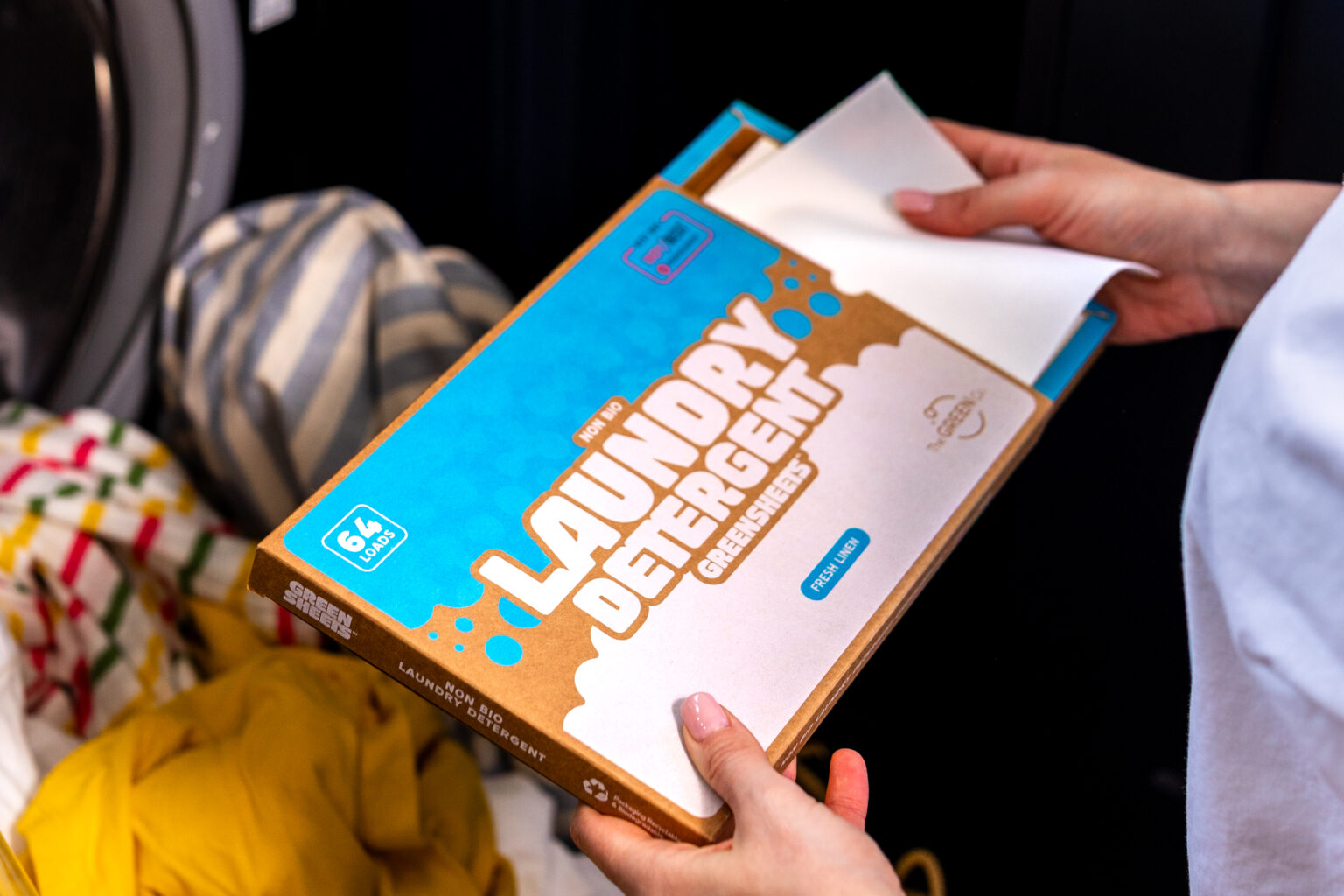
Its GreenSheets laundry detergent sheets come in compact, plastic-free packaging and are designed to be placed directly into the washing machine drum. Rather than pouring detergent into a cap or measuring out powder, the appropriate amount of detergent can be added without the usual mess associated with bottles and containers.
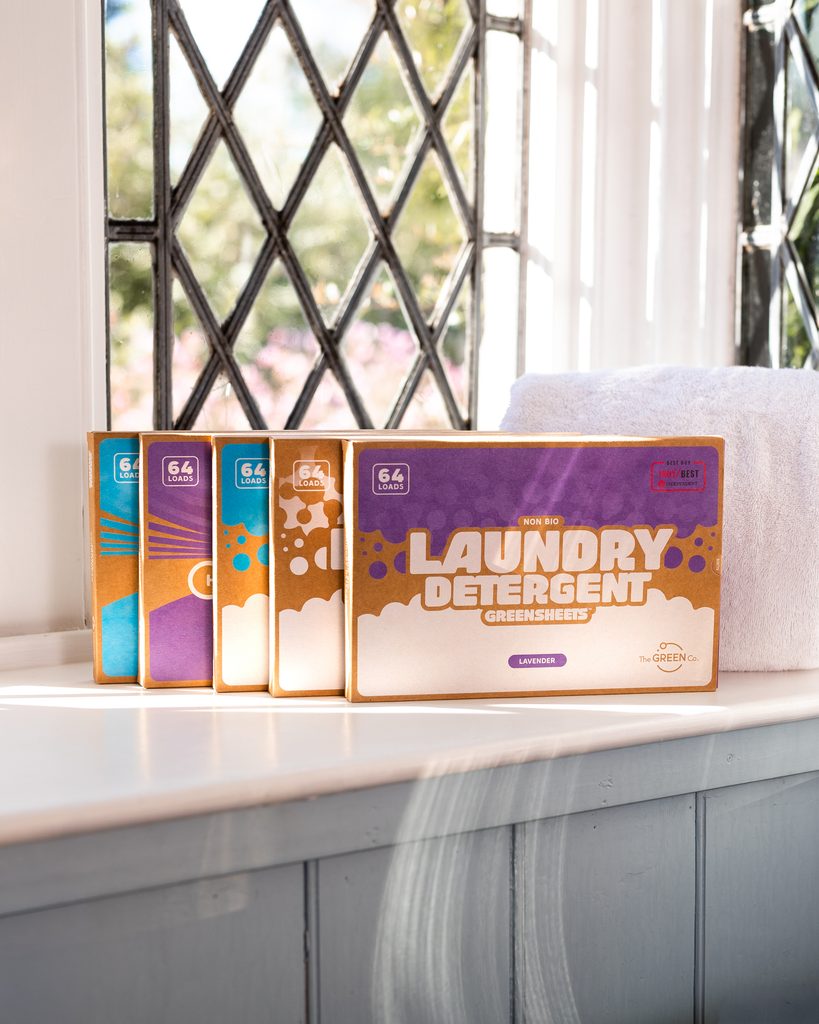
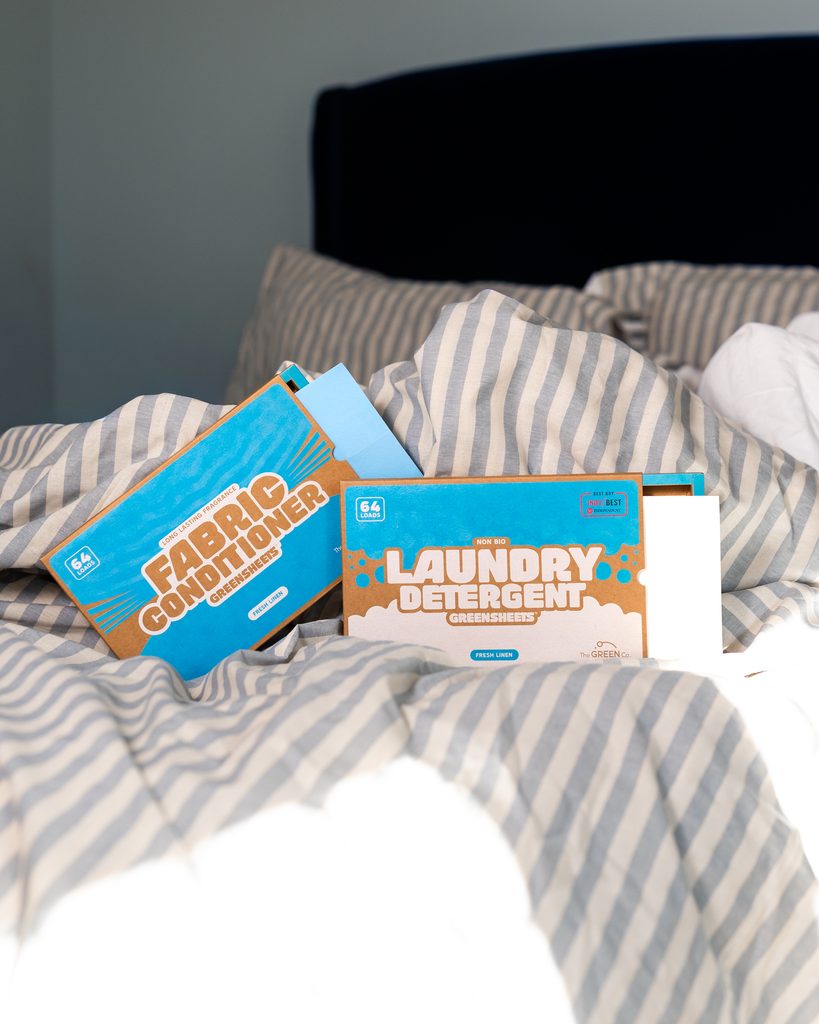
The company offers non-bio sheets in Fresh Linen, Lavender and Fragrance Free varieties, with the latter potentially appealing to families who prefer to avoid added fragrance in their laundry products. According to The Green Co., the sheets are suitable for a range of washing temperatures and cycles, including colder washes, although it is always sensible to follow clothing care labels and the manufacturer’s instructions.
One particularly useful feature is that the sheets can be divided to adjust the detergent dose. The company explains that the amount required depends on factors including load size, how heavily soiled the clothes are and local water hardness, so families can experiment with the appropriate quantity rather than assuming every wash requires exactly the same amount.
For households managing several loads of washing each week, the reduction in packaging and storage space could be a welcome advantage. A slim box of laundry sheets takes up considerably less room than a collection of large detergent bottles, which is especially helpful when the washing machine lives in the kitchen and there is no separate utility room.
The lightweight format is also practical for family holidays, particularly when staying in self-catering accommodation with access to a washing machine. Taking a few detergent sheets away is considerably less cumbersome than packing a bottle of liquid detergent and hoping it survives the journey without leaking.
There is also the environmental consideration. The Green Co. uses plastic-free cardboard packaging for its GreenSheets, reducing the need for the large plastic containers commonly associated with liquid detergents. While packaging is only one part of a product’s overall environmental impact, reducing unnecessary material is a worthwhile consideration when purchasing something as frequently used as laundry detergent.
Anyone thinking about switching can try the company’s small sample pack before committing to a larger quantity, which is particularly sensible for families who regularly wash heavily soiled sports clothing or have specific laundry requirements.
The aim, after all, is to find products that work effectively for your household rather than introducing an alternative that creates additional work.
Getting children involved in managing their own washing
Laundry is also one of those household responsibilities that offers a useful opportunity to develop children’s independence. While younger children may not be ready to operate the washing machine, they can certainly begin learning how to put dirty clothes in the correct place, separate wet items from dry ones and help put away their clean laundry.
As children get older, there is no reason why they shouldn’t gradually become more involved in the washing process, particularly when they are responsible for generating a considerable proportion of it.
Teenagers who regularly need sports kits, school clothes and particular outfits washed can benefit from understanding how much planning is involved in keeping everything clean and ready to wear. Learning to check care labels, sort colours, choose an appropriate washing programme and use the correct amount of detergent are practical skills that will be useful long after they leave home.
Simplifying the products involved can help make these tasks more approachable. A detergent sheet that can be placed directly into the machine, for example, removes the need to measure out liquid detergent, although children should still be taught how to follow product instructions and handle laundry products safely.
The wider goal is to move away from one person being expected to notice, organise and complete every stage of the household washing. Sharing responsibility appropriately can reduce the pressure on parents while helping children understand the work involved in maintaining a home.
The drying problem nobody can escape
For many British households, washing clothes is considerably easier than getting them dry, particularly during autumn and winter when outdoor drying opportunities become less reliable. Tumble dryers are convenient, but frequent use can increase household energy consumption, while relying entirely on indoor airers presents its own challenges when several loads of washing need drying at once.
Making the most of suitable outdoor drying weather can help, even during colder months, provided conditions allow clothes to dry effectively. Indoor airers can also be useful, although adequate ventilation is important to prevent excess moisture accumulating inside the home.
It is worth considering how clothes are hung, too. Leaving enough space between garments allows air to circulate, while shaking out clothes before hanging them can reduce creasing and sometimes make ironing unnecessary.
The type of clothing being washed also matters. Quick-drying sportswear and lightweight fabrics can be considerably easier to manage than thick cotton garments, although care labels should always guide washing and drying decisions.
Families with limited drying space may find that smaller, more frequent loads are easier to manage than attempting to dry an entire week’s washing at once. Although this can maek it feel even more never-ending.
Making laundry more economical without compromising on cleanliness
With household bills remaining an important consideration for many families, there is good reason to think about how much everyday washing actually costs.
The washing machine uses electricity and water, detergent needs replacing regularly and tumble drying can add substantially to the overall expense. Although individual washes may not appear particularly costly, the total can become significant in households running several loads every week. Sometimes though, you just can’t get around this.
Washing at lower temperatures where appropriate can reduce the energy needed to heat water, while using full loads without overfilling the machine helps make efficient use of each cycle. Choosing the correct amount of detergent is another consideration, as adding more than necessary doesn’t automatically produce cleaner clothes and may leave unwanted residue.
Families should also consider whether their chosen detergent performs well on the clothes they wash most frequently. A household dealing with everyday school uniforms may have different requirements from one regularly washing heavily stained football or rugby kits, and some stains will need pre-treatment regardless of which detergent is used.
The most economical solution is ultimately one that cleans effectively without unnecessary product use, repeat washing or excessive energy consumption.
Making the most of a routine that isn’t going anywhere
Unless somebody invents clothes that clean and put themselves away, laundry is going to remain a regular feature of family life. There will always be towels to wash, school clothes to prepare and the occasional forgotten sports kit discovered at precisely the wrong moment. What can change is the amount of unnecessary effort involved in managing it all.
Creating a routine that suits the household, encouraging children to take appropriate responsibility, avoiding unnecessary washing and choosing practical products can collectively make the job feel less demanding.
Innovations such as The Green Co.’s laundry detergent sheets are interesting precisely because they address an ordinary household inconvenience rather than requiring families to adopt an entirely new way of doing things. Reducing bulky packaging, simplifying detergent measurements and making storage easier may seem like relatively minor improvements, but small conveniences are often particularly welcome when repeated several times a week.
There is also something to be said for examining household routines that have remained largely unchanged simply because nobody has thought to question them. The products and systems families have always used aren’t necessarily the most convenient options available today, and occasionally trying something different can reveal a better way of managing an everyday task.
Family laundry might never become anyone’s favourite household job, but it doesn’t need to occupy quite so much time, cupboard space or mental energy. A few sensible changes could make the difference between constantly feeling behind with the washing and having a routine that works reasonably well, even when the children seem determined to wear every item of clothing they own in a single week.
Leave a Reply