Family holidays often begin with the best of intentions. There are places to explore, landmarks to tick off and activities carefully researched weeks in advance. By the end of the trip, however, many parents return home feeling as though they need another holiday to recover.
The pressure to “make the most” of precious time away can quietly turn family travel into another carefully managed project. Every day is planned, every attraction squeezed into the itinerary and every moment expected to create lifelong memories. Yet some of the most rewarding family holidays happen when there is enough space to slow down.
Choosing to see less doesn’t mean getting less from a trip. In many cases, it allows families to experience far more.
Why Do We Feel the Need to Fit Everything In?
Travel has never been more accessible or more visible. Social media is filled with destination guides, hidden gems and “must-see” attractions, making it easy to believe that every successful holiday should be packed with experiences.
Parents naturally want to make family holidays memorable, particularly when time and money are limited. If you’ve travelled hundreds of miles, it can feel wasteful not to visit every famous landmark within reach.
The result is that holidays can begin to resemble ordinary life. There is another timetable to follow, another list to complete and another rush to be somewhere before the crowds arrive.
Perhaps the greatest luxury on holiday is not another excursion, but the freedom to stop watching the clock.
What Does Slow Travel Actually Mean?
Slow travel isn’t about travelling slowly or spending weeks away. It’s about experiencing a place more deeply instead of trying to see everything.
That might mean spending an afternoon in one village rather than racing through four. It could involve returning to the same beach several times instead of searching for a different one every day. Sometimes it is simply choosing to wander without a destination.
Research published in the Journal of Travel Research has suggested that meaningful travel experiences are often shaped by emotional connection rather than the number of attractions visited. Families tend to remember how a place made them feel long after they have forgotten the order in which they visited its landmarks.
Children Often Notice What Adults Miss
Adults frequently focus on destinations. Children are more interested in experiences.
Ask a child about their favourite holiday memory and they may not mention the famous castle or museum. They are just as likely to remember feeding ducks by a river, finding unusual shells on the beach or making friends at a campsite playground.
Those moments happen because children are naturally curious when they have time to explore.
Leaving space in the itinerary allows families to follow that curiosity instead of constantly moving on to the next attraction.
The Joy of Unplanned Discoveries
Some of the best travel memories cannot be researched beforehand.
It might be stumbling across a local market while wandering through quiet streets, discovering a family-run café where everyone feels welcome or finding a viewpoint that never appeared in any guidebook.
These experiences rarely become viral social media posts, yet they often become the stories families tell for years afterwards.
Travelling more slowly creates opportunities for those unexpected moments to happen.
Practical Ways to Travel More Slowly
Creating a slower family holiday doesn’t require a complete change in travel style.
Instead, consider a few simple changes:
- Plan one main activity each day instead of several.
- Leave part of every day completely unscheduled.
- Build in time for parks, beaches or town squares where children can simply play.
- Return to places your family genuinely enjoys instead of constantly seeking somewhere new.
- Ask local residents for recommendations rather than relying entirely on online lists.
These small decisions can reduce stress while creating more opportunities for meaningful family experiences.
Family Lens Takeaway
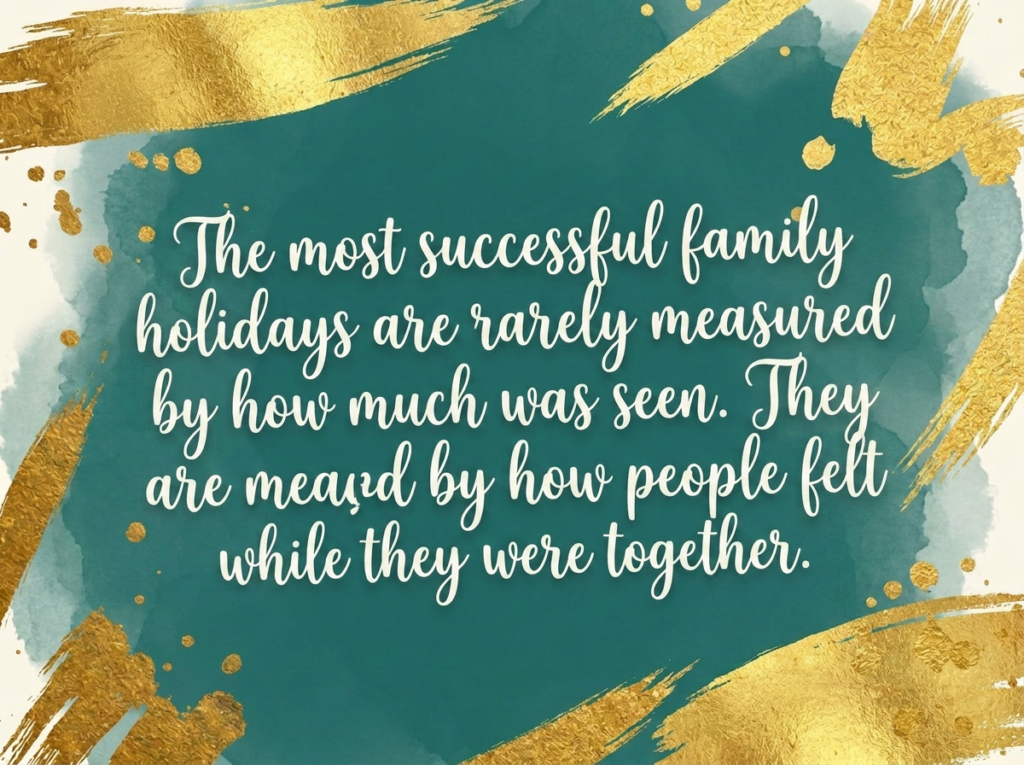
The most successful family holidays are rarely measured by how much was seen. They are measured by how people felt while they were together.
Visiting famous attractions can be wonderful, yet the conversations over a long lunch, the laughter during an unexpected detour and the freedom to spend an hour watching children play often become the moments that stay with us.
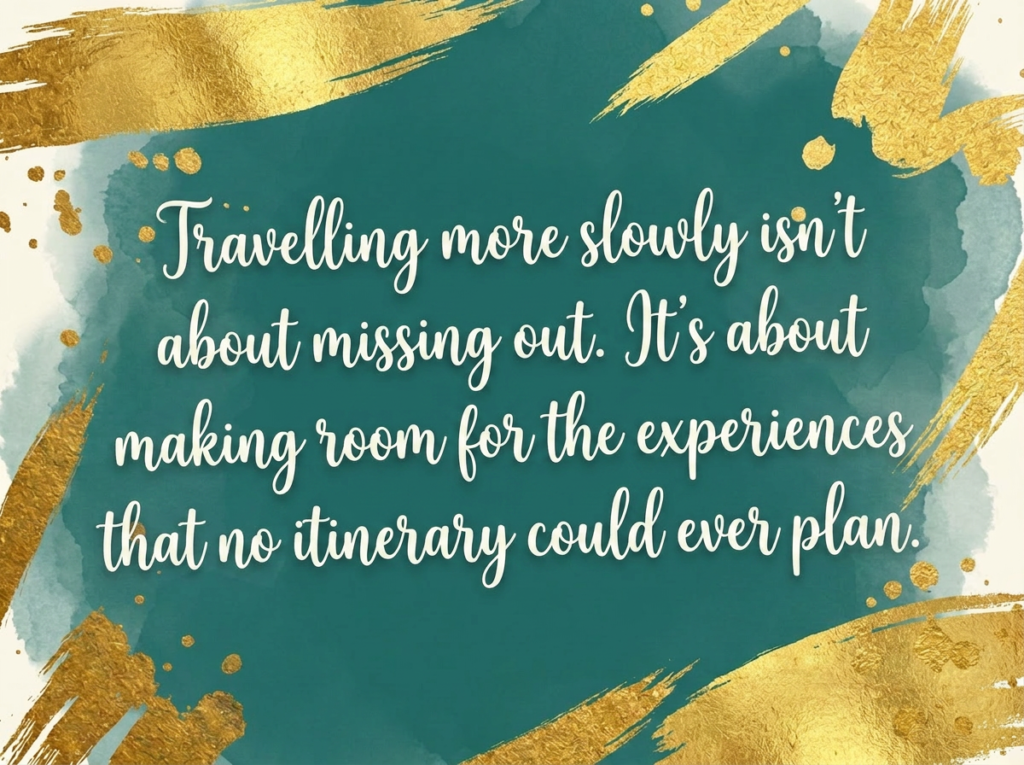
Travelling more slowly isn’t about missing out. It’s about making room for the experiences that no itinerary could ever plan.
[…] about whether they are doing enough. Am I reading enough bedtime stories? Should we be going on more adventures? Are we making enough […]
[…] family travel does not have to follow the traditional model of one expensive holiday each year. With a slightly […]