

***Mummy Fever readers can enjoy 10% off eligible Sheetcraft PDFs using the exclusive discount code MUMMYFEVER10.***
Affiliate disclosure: This article contains affiliate links and a discount code. Mummy Fever may earn a commission on qualifying purchases, at no additional cost to you.
Christmas is supposed to be a time for enjoying family traditions, spending time together and taking a break from everyday routines. In reality, the weeks leading up to it can become one of the busiest periods of the year, particularly for parents.
There are presents to buy, school events to attend, food to organise, relatives to accommodate and countless small jobs that somehow need completing before Christmas Eve. Even families who prefer a relatively simple celebration can find themselves juggling an enormous number of decisions.
Much of the pressure comes from trying to remember everything. You might have a Christmas gift list saved on your phone, a food shopping list stuck to the fridge and a collection of delivery confirmation emails buried in your inbox. Keeping track of it all takes time and mental energy, especially when ordinary family life doesn’t stop for December.
Christmas planning for families doesn’t need to involve elaborate schedules or weeks of preparation. However, having a clear overview of what needs doing can help prevent unnecessary spending, forgotten tasks and those frantic last-minute shopping trips.
Why Christmas Can Feel So Overwhelming for Parents
One of the biggest challenges of Christmas is the sheer number of small responsibilities involved. Individually, most are manageable. Buying wrapping paper, checking delivery dates or remembering to order something for Christmas dinner doesn’t take particularly long.
The difficulty comes when these jobs accumulate alongside work, school commitments and everyday household responsibilities. Parents may also find themselves coordinating family gatherings, arranging activities during the school holidays and making sure everyone has what they need.
The mental load of Christmas often falls disproportionately on one person. Even when tasks are shared, someone usually takes responsibility for remembering what needs doing and making sure everything happens at the right time.
Writing things down can make that workload more visible. It also makes it easier to divide responsibilities between family members rather than relying on one person to manage everything.
Start With a Realistic Christmas Budget
Christmas spending can increase quickly, especially when purchases are spread across several weeks. A few presents bought in November, decorations picked up during a shopping trip and extra food added to the weekly shop can make it difficult to know how much you’ve spent overall.
Setting a budget before shopping begins provides a useful starting point. Rather than focusing only on presents, consider the wider costs of Christmas, including food, travel, entertainment, decorations and hosting.
It’s also worth thinking about how much you genuinely want to spend. Christmas can create pressure to buy more than necessary, particularly when children are exposed to advertising, gift guides and endless conversations about what everyone else is getting.
A written budget makes it easier to prioritise the things that matter to your family. It can also highlight opportunities to save money, such as agreeing on gift limits, organising a family Secret Santa or making better use of decorations you already own.
Keeping a record of purchases as you go helps prevent surprises when January arrives.
Keep Christmas Gifts and Deliveries Organised
Gift shopping is often one of the most time-consuming parts of Christmas preparation. Families may be buying for children, grandparents, teachers, friends and other relatives, sometimes across several different shops and websites.
Without a clear system, it’s surprisingly easy to forget what you’ve already purchased. Online orders can become particularly confusing when items arrive in separate deliveries or are stored away until it’s time to wrap them.
A dedicated Christmas gift list allows you to record who you’re buying for, what you’ve chosen and how much you’ve spent. Adding a note about whether an item has arrived or been wrapped can also prevent unnecessary last-minute panic.
For families with several children, keeping track of gifts can be useful when trying to maintain a reasonable balance without buying things simply to make the number of presents look equal.
It’s also sensible to decide where presents will be stored and keep wrapping supplies together. Having everything in one place can save time when you finally get an opportunity to wrap gifts without an audience.
Make Christmas Food Planning More Manageable
Food is another area where a little preparation can make a significant difference. Christmas dinner might be the main event, but families also need to think about breakfasts, snacks, visitors and meals during the surrounding days.
Planning menus in advance helps avoid buying too much food or discovering that an essential ingredient is missing when the shops are closed.
Start by deciding what you actually want to serve. Traditional Christmas meals can involve a surprising number of dishes, but there’s no requirement to prepare everything simply because it’s what you’ve always done.
Consider the number of guests, dietary requirements and how much time you want to spend cooking. Some dishes can be prepared ahead of time, while others may be easier to simplify.
Checking cupboards and the freezer before shopping can also reduce unnecessary spending. It’s easy to buy duplicate ingredients when Christmas food shopping happens across several different trips.
A menu plan and shopping list can help keep everything organised, particularly when several family members are responsible for different parts of the meal.
Don’t Leave All the Household Preparation Until Christmas Eve
For families hosting Christmas, preparing the house can become another major task. Guest bedrooms may need organising, extra seating might be required and everyday household jobs can suddenly feel more urgent.
Trying to complete everything in the final few days is rarely enjoyable. Spreading jobs across December can make the workload much more manageable.
Start with the areas that will actually be used. If relatives are staying overnight, focus on sleeping arrangements and bathroom essentials. If you’re hosting Christmas dinner, consider the dining area, kitchen space and any equipment you’ll need.
There’s little benefit in spending hours cleaning rooms that guests won’t use while leaving important preparations until the last minute.
Involving other family members can also help. Older children can take responsibility for tidying their rooms, organising decorations or preparing spaces for visitors.
The aim should be a welcoming, comfortable home rather than an unrealistic standard of perfection.
Using a Printable Christmas Planner to Bring Everything Together
One way to make Christmas planning for families easier is to keep the main information in one place. Instead of managing several notebooks, phone reminders and shopping lists, a dedicated planner can provide a clearer overview of what still needs doing.
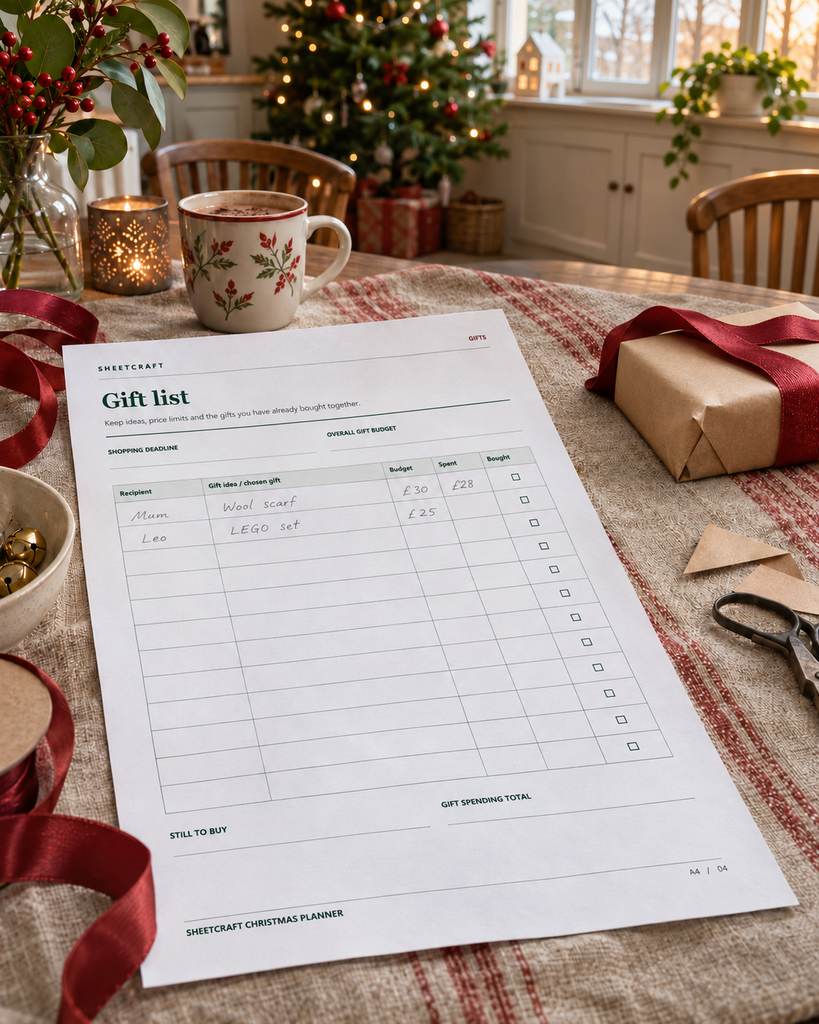
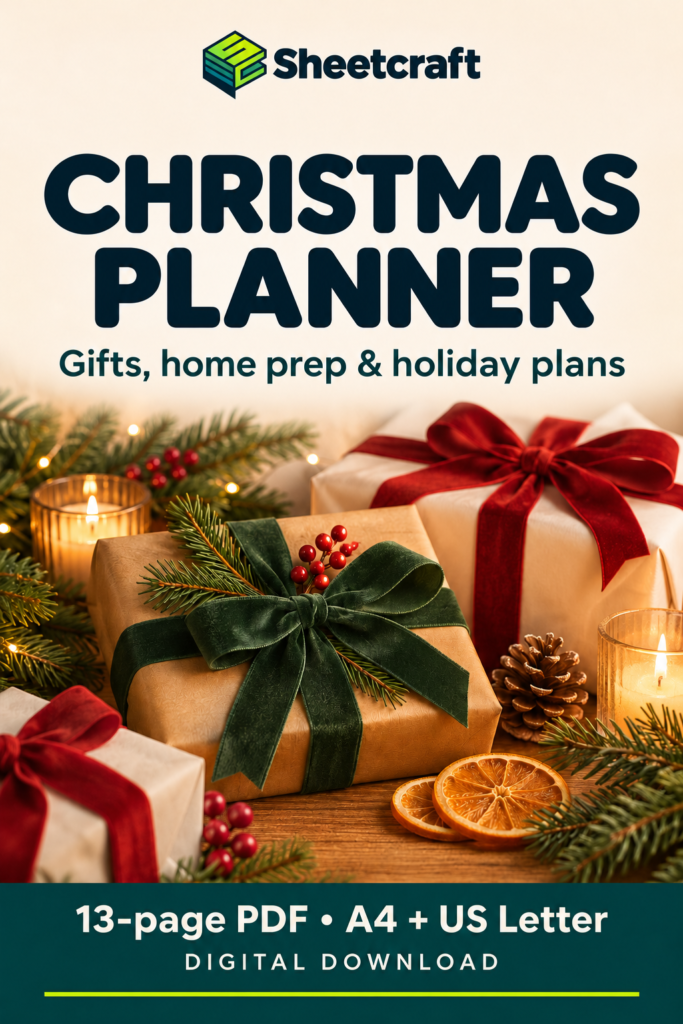
The SheetCraft Christmas Planner is a printable PDF designed to help organise the practical details of the festive season. It brings together gift planning, budgeting, household preparation, food shopping and Christmas schedules in one set of worksheets.
The planner includes a gift list and budget section, along with a tracker for orders, deliveries and wrapping. These are particularly useful for families who buy presents gradually and want to keep track of what’s already been purchased.
There is also a Christmas overview, a room-by-room cleaning checklist and a countdown covering the final 48 hours before Christmas. For families hosting relatives, the guest and hosting planner can help organise arrangements without relying on scattered notes.
Food preparation is covered through a Christmas menu planner, shopping and pantry lists. Separate schedules for Christmas Eve and Christmas Day provide space to organise the busiest parts of the celebrations.
The download includes two English-language PDF files, one formatted for A4 paper and the other for US Letter. Each contains 13 pages, including 11 reusable worksheets. You can print the pages you need rather than using the entire planner.
It’s a practical option for people who prefer writing things down and having a physical checklist they can refer to throughout December.
Explore the SheetCraft Christmas Planner here.
Share the Christmas Workload Across the Family
Planning tools can help organise Christmas, but they shouldn’t become another responsibility for one person to manage alone.
Once you’ve written down what needs doing, consider which tasks can be shared. Children can help with decorations, writing cards, wrapping suitable gifts and preparing the house for visitors. Partners and other family members can take responsibility for shopping, cooking or coordinating arrangements.
Giving people ownership of particular jobs is often more effective than asking them to help occasionally. It reduces the need for constant reminders and allows everyone to contribute.
For older children, involving them in Christmas budgeting and shopping decisions can also provide useful opportunities to discuss money, priorities and the difference between needs and wants.
A family planning session doesn’t have to be formal. Spending twenty minutes discussing the coming weeks can be enough to identify important dates, agree on responsibilities and prevent misunderstandings.
Leave Room for Enjoyment and Spontaneity
Although planning can reduce stress, it’s important not to schedule every moment of the festive season.
Families often feel pressure to fit in Christmas markets, light trails, baking sessions, films, crafts and numerous other activities. While these experiences can be enjoyable, trying to do everything can leave very little time to relax.
Choose a few traditions that genuinely matter to your family and allow space for quieter days. Children don’t necessarily need expensive outings or elaborate activities to enjoy Christmas.
A walk, an afternoon watching films, decorating biscuits or playing board games can be just as memorable as a carefully organised festive event.
It’s also worth being realistic about how much energy everyone has. The end of the school term can be tiring for children, while parents may be balancing work deadlines with Christmas preparations.
A good Christmas plan should make family life easier, not create an additional list of expectations.
Getting Organised for a More Relaxed Christmas
Christmas preparation can become overwhelming when everything is left until the final few days. However, spreading tasks across several weeks and keeping important information together can make the season much easier to manage.
Start with a realistic budget, organise gift purchases as you go and plan food around what your family actually enjoys. If you’re hosting, identify the essential household jobs and share them wherever possible.
A printable resource such as the SheetCraft Christmas Planner can help bring these different responsibilities together. Its reusable worksheets offer a straightforward way to keep track of spending, shopping, deliveries and preparations without creating a complicated planning system.
Most importantly, remember that Christmas doesn’t need to be perfectly organised to be enjoyable. Having a plan simply gives you more time and energy to spend on the people and traditions that matter.
***Mummy Fever readers can enjoy 10% off eligible Sheetcraft PDFs using the exclusive discount code MUMMYFEVER10.***
Simply enter MUMMYFEVER10 at checkout or use the link below to apply the discount automatically:
Shop Sheetcraft and save 10% with MUMMYFEVER10
As these are digital products, there is no need to wait for a delivery. Once purchased, the PDFs can be downloaded and printed at home. Most Sheetcraft resources are designed to be completed by hand rather than edited digitally, so it is worth checking the individual product description for printing requirements, formats and licence details before purchasing.
Leave a Reply