
Disclosure: This article discusses Brick by Brick: Building the Dream, written by The Family Lens founder, Charlotte Camplejohn. The Amazon link is an affiliate link, which may generate commission at no extra cost to the reader.
Families repeat stories around dinner tables, on car journeys or when somebody discovers an old photograph. Everyone knows the amusing ending or the small disaster that became funny years later.
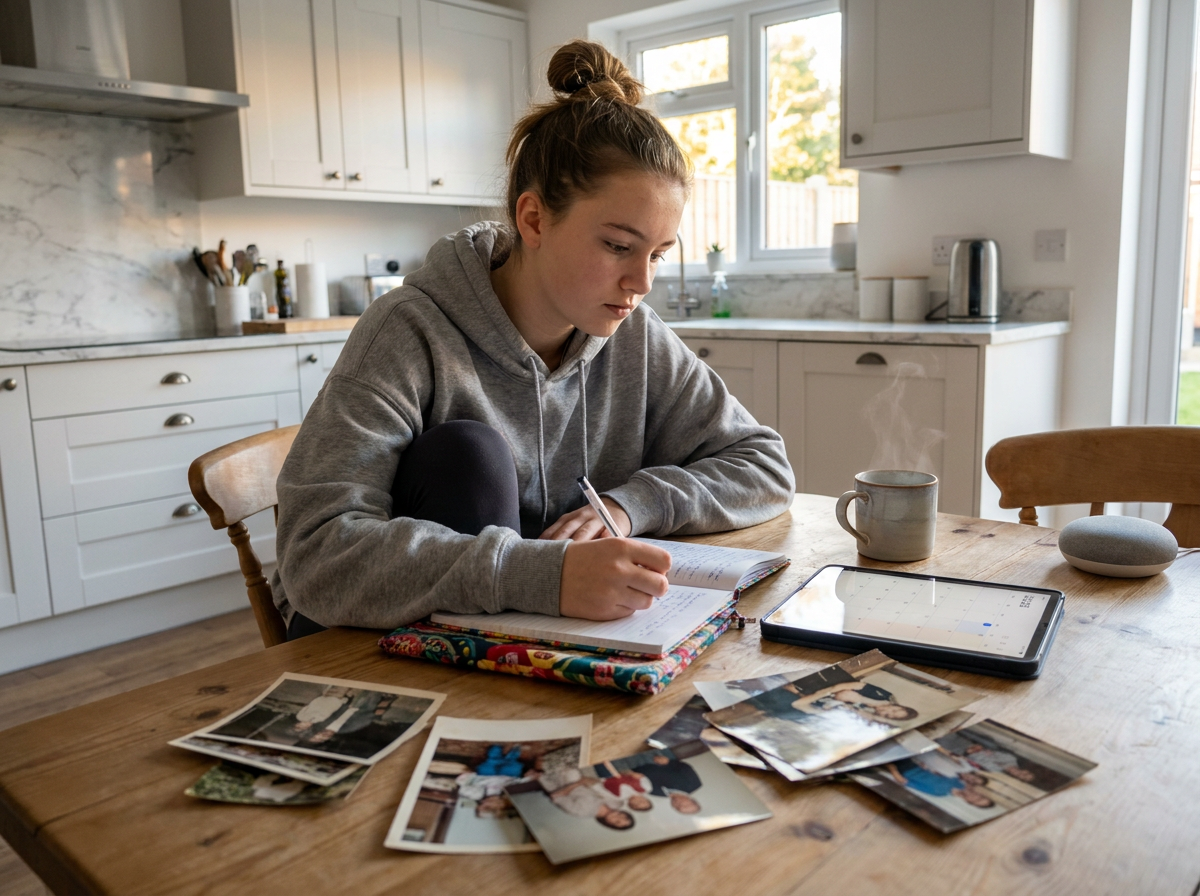
Familiar stories can feel permanent. In reality, memories soften, details disappear and the usual storyteller may no longer be there. Preserving family stories means recognising that ordinary experiences become valuable when they explain who a family was, what it survived and how it changed.
Family history is more than names and dates
A family tree records relationships, but it rarely captures the texture of a life. It cannot show how a kitchen smelt on Sunday morning, why a particular journey mattered or how people kept going when plans fell apart.
Children may know where relatives lived without understanding those lives. Personal stories add humour, mistakes and emotions, turning names in photographs into complete people.
The stories most likely to disappear can seem unimportant
Major events are usually photographed and discussed. Smaller details are easier to lose: school-day routines, family sayings, difficult decisions, friendships, first homes and the quiet work involved in building a shared life.
These details often become the most interesting later. A description of an ordinary shopping trip or family meal can reveal more about a period than a list of achievements. Preserving memories means paying attention before time decides what was important.
Recording a story can reveal what it meant
Living through an experience and understanding it are not always the same thing. Writing creates distance. It allows somebody to notice the decisions, relationships and turning points hidden inside what once felt like daily chaos.
A house renovation, international move or long family project may appear to be a story about a place. Look closer and it may also be about resilience, partnership, identity, community or the meaning of home. Recording events often reveals the deeper story beneath them.
Start before the memories feel organised
Many people postpone writing because they do not know where to begin. A complete autobiography is not necessary. One vivid scene can be enough: arriving somewhere new, meeting an important person or realising that a plan had changed.
Useful prompts include:
- Which family story is always retold?
- What did home feel like at a particular age?
- Which decision changed the family’s direction?
- Who offered help when it was most needed?
- What would younger relatives never guess about this period?
- Which lesson should not have to be learnt again?
Voice notes can capture memories while they are fresh. Photographs, letters, recipes and old messages may provide dates or details. The first version only needs to exist; it does not need to be polished.
Ask for several versions of the same event
Family memories do not always match. Two siblings can remember the same holiday differently, while a child may have completely misunderstood a decision made by the adults.
These differences are not necessarily problems to solve. They show how experience changes according to age, responsibility and perspective. Recording more than one account creates a richer family history and avoids turning one person’s memory into the only accepted truth.
Leave room for honesty and privacy
Preserving family stories does not require publishing every detail. Some experiences belong within the family, some need time before they can be told and some involve people who may not want their lives recorded publicly.
Writers can change identifying details, ask permission or decide that a particular section is intended only for future relatives. Honesty matters, but so do kindness and boundaries. A family legacy should not be built by removing somebody else’s right to privacy.
When a building project becomes a family story
In Brick by Brick: Building the Dream, Charlotte Camplejohn records her family’s experience of building a home from the ground up in rural France.
The house provides the structure, but the memoir reaches beyond construction. It follows the challenges, unexpected moments and relationships formed with the local community, preserving the grit, humour and joy that might otherwise have faded into a handful of remembered anecdotes.
The book will appeal to readers interested in self-building, rural France and family adventures. Its wider invitation is equally important: look again at the experiences a family has lived through and consider which ones deserve to outlast memory.
A story does not need to be finished to be worth keeping
Families often wait for a neat ending before recording what happened. Real life rarely provides one. Homes continue to change, children grow and the meaning of an experience may shift over time.
Preserving family stories is less about producing a definitive record than leaving a door open between generations. A written memory says, ‘This happened, this mattered, and this is how it looked from here.’ Future family members can add their own understanding.
The stories most worth saving help somebody in the future recognise where they came from and feel less alone in building what comes next.
Leave a Reply