*This article contains an affiliate link*
Getting dressed is usually treated as one of the simplest parts of the day. Clothes keep us warm, help us feel presentable and allow us to express something about who we are. For many children and adults, however, clothing also affects how manageable the world feels.
A sleeve can provide something to hold during an anxious moment. A familiar hood can create a small sense of privacy in an overwhelming environment. Weight, softness and pressure may offer comfort when everything else feels noisy, unpredictable or demanding.
This is where sensory clothing becomes interesting. Instead of treating clothing as something that merely covers the body, it considers how a garment feels, what it allows the wearer to do and whether it can become a discreet source of support throughout the day.
Why Small Sensory Needs Affect the Whole Family
Sensory needs do not exist in isolation. A child who finds school clothing uncomfortable may struggle to get dressed, become distressed before leaving the house and arrive at school already overwhelmed. The effect can spread quickly through the morning, influencing siblings, parents, transport arrangements and the emotional tone of the entire household.
Similar patterns can appear during travel, shopping trips, medical appointments and busy family events. A child may chew their sleeves, pick at their skin, pull repeatedly at uncomfortable clothing or seek constant movement. Adults may respond by asking them to stop without recognising that the behaviour could be helping them manage tension, concentration or sensory overload.
Parents are often placed in the difficult position of balancing several needs at once. They may want to help a child regulate while also dealing with school expectations, public reactions and the practical need to keep everyone moving. A sensory tool that works at home may be forgotten, dropped or rejected in a setting where the child feels self-conscious.
Sensory clothing for families offers a different possibility. The support is already part of something the person would be wearing, reducing the need to carry extra items or explain why they are using them.
Clothing Is Never Just About Appearance
The clothing industry tends to prioritise appearance, trends and standard sizing. Comfort may be considered, but the deeper relationship between clothing and the nervous system receives far less attention.
This raises a wider question about what clothes are expected to do. A jumper can be stylish and warm, but could it also provide something safe to squeeze during an anxious moment? Could a drawstring satisfy the need to chew without damaging a sleeve? Could a heavier fabric offer a reassuring physical sensation without making the wearer look noticeably different?
These questions matter particularly for neurodivergent children and adults, although sensory preferences are not limited to people with a diagnosis. Many people fidget when concentrating, seek pressure when worried or feel more secure in a familiar oversized hoodie. Some recognise these patterns clearly, while others simply know that particular clothes help them feel more comfortable.
Sensory-friendly design does not need to turn clothing into medical equipment. Its value may lie in making ordinary garments more responsive to the people wearing them.
The Need for Support That Does Not Draw Attention
Children are often expected to regulate themselves in environments that provide very little opportunity to do so. They sit through lessons, assemblies and journeys while processing noise, movement, social expectations and changing demands. A visible sensory tool may help, but it can also attract questions or make a child feel different from their peers.
Adults face their own version of this difficulty. Someone may benefit from fidgeting during meetings, travelling or waiting in a crowded place, yet feel uncomfortable using an obvious stress toy. The pressure to appear calm can exist at the exact moment when a person most needs a way to manage what they are feeling.
Discreet design can remove some of this tension. A built-in sensory feature allows the wearer to seek movement or pressure without having to announce it. The clothing does not remove the source of anxiety or overstimulation, but it may offer a small and accessible way to respond.
This distinction is important. No hoodie can ‘treat’ anxiety, ADHD or another situational overwhelm, and clothing should not be presented as a substitute for professional support. A well-designed garment can still become one useful element within a much wider picture that may include family understanding, school support, therapy, movement, rest and changes to the environment.
How Cloud Nine Clothing Approaches Sensory Design
Cloud Nine Clothing is a Canadian brand creating everyday clothing with sensory tools built into it. Its range includes hoodies, children’s clothing, bottoms and accessories designed to look relatively conventional while providing discreet ways to squeeze, fidget, chew or seek comforting pressure.
The brand was founded by Vansh, who describes wanting something wearable that could help during experiences of anxiety and overstimulation – sensory clothing. Cloud Nine says its products are designed around real routines, including school, work, travel, errands and quieter moments at home. This everyday focus is one of the more thoughtful aspects of the idea, since useful support needs to fit into life rather than create another item for a family to organise.
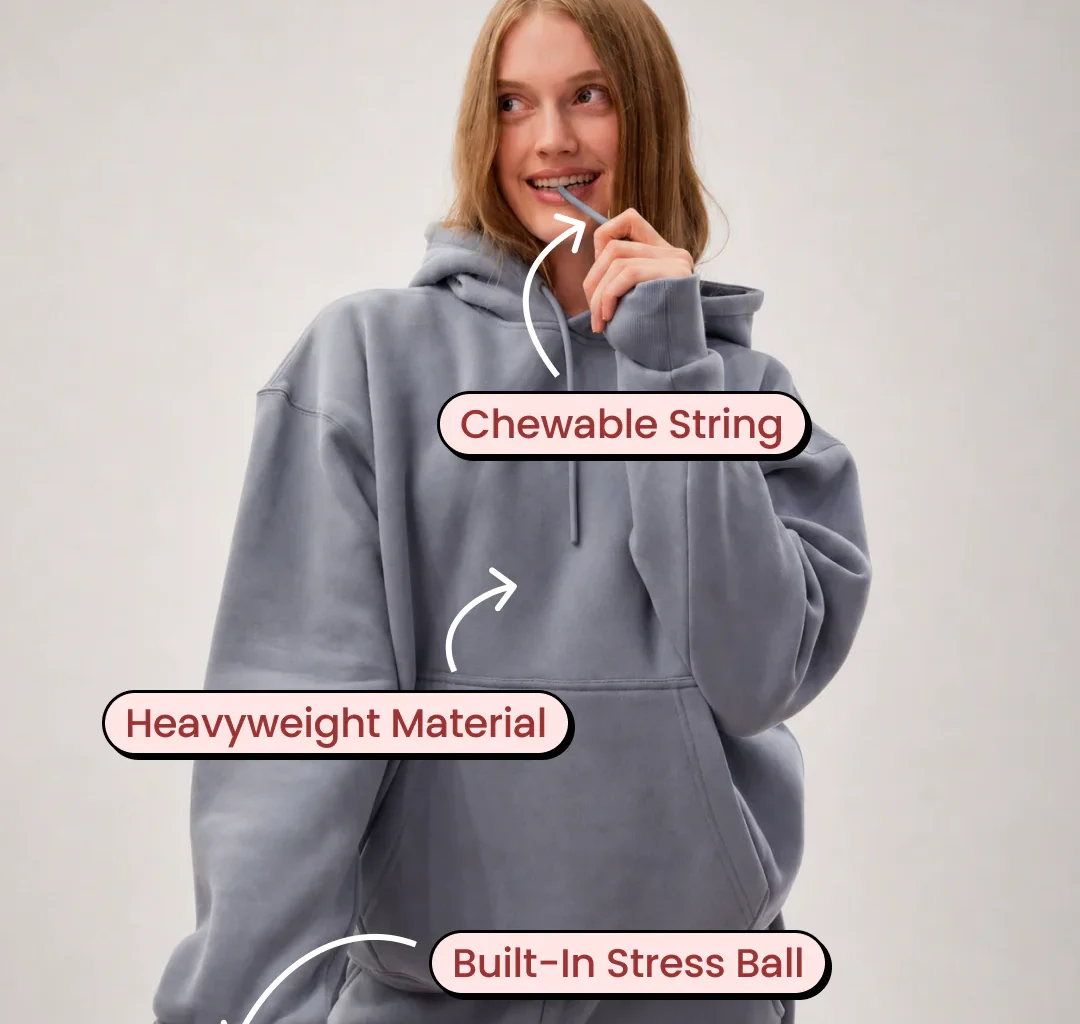
Features vary between garments. The brand’s hoodies include options with built-in stress balls in the cuffs, while the Cloud Eleven Hoodie has mouth-safe silicone chew strings alongside tactile support in the sleeves. Cloud Nine also offers an aromatherapy design with a concealed scent pocket, as well as children’s sizes and zip-up styles for people who dislike pulling clothing over their heads. The company explains more about its designs and development on its About page.
The result is not a single sensory solution presented as suitable for everyone. It is a collection of garments responding to different preferences, which matters because sensory needs can vary considerably. One person may seek weight and pressure, while another finds heavy clothing uncomfortable and prefers a lighter layer with something to fidget with.
Could Sensory Clothing Help in Everyday Family Life?
A sensory hoodie may be especially useful during parts of the day that involve waiting, transition or uncertainty. Journeys, school runs, airports, busy attractions and medical appointments can all require children to manage long periods with limited control over what happens next.
Having a familiar garment available may provide continuity between different environments. The child is not expected to locate a separate sensory item every time they need one, and the parent has one less thing to remember. This does not guarantee a calm day, but small reductions in practical and emotional pressure can be meaningful.
Older children and teenagers may particularly value the discreet nature of sensory clothing. They may still need support while becoming more aware of how they appear to others. A garment that resembles an ordinary hoodie can allow them to meet a sensory need without feeling that they are carrying something intended for much younger children.
Adults should not be overlooked. Parents may spend so much time supporting their children’s regulation that they give little thought to their own needs. Clothing that provides comfort or a discreet outlet for restless hands could be useful during work, travel or the demanding parts of family life, whether or not the wearer identifies as neurodivergent.
Choosing Sensory Clothing Thoughtfully
The word “sensory” does not automatically mean that a garment will suit every sensory seeker. Fabric weight, texture, fit, seams, temperature and the position of built-in features can all affect whether something feels reassuring or irritating.
Families may find it helpful to begin with the wearer’s existing habits. Someone who constantly squeezes objects may respond differently from someone who chews sleeves or seeks the enclosed feeling of a heavy hood. Observing what the person already does can be more useful than choosing a product based solely on its most prominent feature.
Choice remains important, particularly for children. A parent may see the practical benefits of sensory clothing, but the child still needs to like the style, colour and feel of the garment. Support is unlikely to be useful if the item remains unworn in a drawer.
Cloud Nine currently offers products for children and adults and provides a 30-day fit and satisfaction policy, although customers should check the latest sizing, delivery and returns information before ordering internationally. The website allows shoppers to select the United Kingdom as their country or region, with final costs calculated during the ordering process.
A Tool, Not a Complete Answer
Family life is full of small accommodations that are rarely noticed from the outside. A particular cup, a familiar route, a quieter supermarket or an extra ten minutes before leaving can make the difference between a manageable experience and an overwhelming one.
Sensory clothing belongs within this collection of practical adjustments. It will not remove every source of anxiety, prevent all difficult mornings or replace the need to understand what lies behind someone’s distress. It may, however, provide comfort and greater independence at the moment it is needed.
Perhaps clothing should not always ask the wearer to tolerate its design. A more inclusive starting point is to ask what the garment could do for the person inside it. Cloud Nine Clothing offers one thoughtful answer by turning an ordinary layer into something that can also be squeezed, held, chewed or used to feel a little more grounded.
Readers can explore the Cloud Nine Clothing range and use discount code CHARLOTTE20460 at checkout.
Leave a Reply