
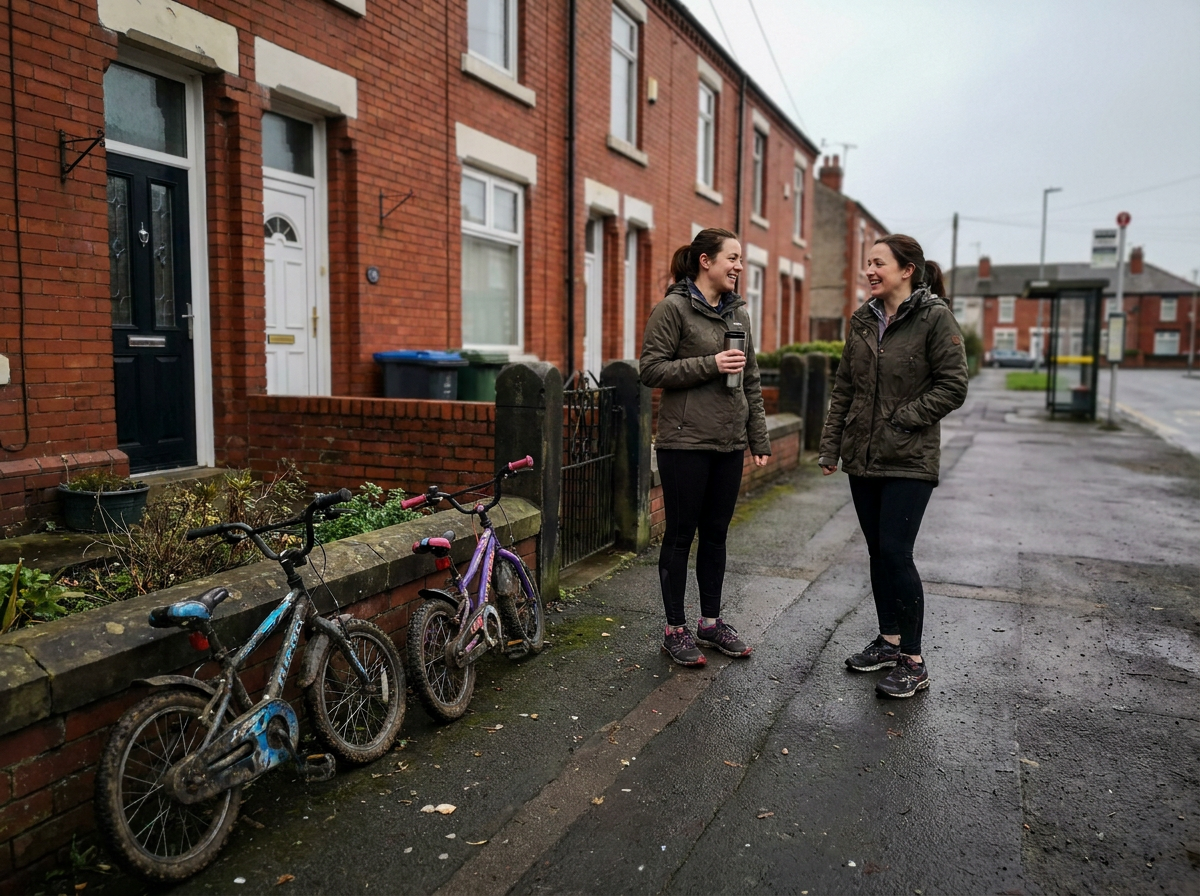
“It takes a village to raise a child.”
It is one of those phrases that has become part of everyday conversation. Parents often use it when talking about the challenges of raising children without nearby family, affordable childcare or enough hours in the day. It captures a feeling that many families recognise: parenting can be hard, and doing it alone can feel even harder.
Over time, though, the phrase has become almost entirely associated with childcare. The village is often imagined as grandparents collecting children from school, neighbours helping in an emergency or friends stepping in when life becomes overwhelming. Yet that may never have been the whole story.
A village was not simply a group of people helping to raise children. It was a community that helped people through every stage of life.
Villages were about belonging
Children have always been part of a wider community. They learned from parents, certainly, but also from grandparents, neighbours, teachers, older children and countless other adults whose influence shaped their understanding of the world. Growing up surrounded by trusted people gave children a sense that they belonged to something bigger than their immediate family. The same was true for adults.
New parents had people to turn to when they lacked confidence or experience. Older generations passed on practical knowledge, family stories and traditions. People celebrated together, mourned together and supported one another through illness, hardship and change. Everyday life was rarely carried by one household alone.
That does not mean villages were perfect. Communities have always had their challenges, and not everyone felt included or supported. Even so, there was often a shared understanding that life was something people experienced together rather than separately.
Every stage of life needs a village
The phrase “it takes a village” often appears in conversations about young children, yet there are few stages of life that do not benefit from community.
Teenagers need trusted adults beyond their immediate family as they begin to find their place in the world. Young adults navigating work, study or relationships often rely on encouragement from people outside their own household. Parents caring for ageing relatives can find enormous comfort in practical help or simply knowing someone understands what they are experiencing.
The same is true for people adjusting to retirement, recovering from illness, moving to a new area or coping with bereavement. Different seasons bring different needs, yet very few of us reach a point where encouragement, friendship or practical support no longer matter.
Perhaps villages were never really about making parenting easier. Perhaps they were about making life more manageable for everyone.
Independence has changed the way we live
Modern life offers freedoms that previous generations could only have imagined. Many of us can work from home, shop online, access services with a few taps on a screen and stay in touch with people living on the other side of the world.
These changes have brought enormous benefits, yet they have also altered the way communities function. It is possible to spend an entire day meeting practical needs without speaking to another person. Neighbours may live side by side for years without ever learning one another’s names. Families often move for work or education, leaving relatives and long-standing friendships many miles away.
According to the Campaign to End Loneliness, loneliness affects people of all ages and backgrounds across the UK. It is not simply the absence of people that creates loneliness, but the absence of meaningful connection and a sense of belonging. Technology has made many aspects of life easier. Building community still requires people.
The village has not disappeared
It would be easy to conclude that villages no longer exist, yet that is probably not true. Today’s village simply looks different.
It might be the parent who offers to collect another child after football training. It could be the neighbour who notices the bins have not been put out or the colleague who quietly checks in after a difficult week. It might be the volunteer at a local library, the coach who believes in a young person, the friend who arrives with a meal after surgery or the WhatsApp group that helps families navigate everyday life.
These connections may not resemble the close-knit communities of previous generations, but they are still acts of belonging.
Communities are not built only through grand gestures. More often, they grow through ordinary moments of kindness that tell people they are seen, valued and not facing life entirely on their own.
Building the village
When parents talk about needing a village, the conversation naturally focuses on the support they wish they had. That is understandable, particularly during seasons of life that feel demanding or isolating. Yet looking at the idea of a village from another perspective raises an equally interesting question. Rather than asking where our own village has gone, it may be worth asking whose village we are already part of.
Building community rarely depends on grand gestures. More often, it grows through small acts that become part of everyday life. It might be introducing yourself to a new neighbour, offering to collect a child after an after-school club, checking in on someone who has been unwell or taking the time to listen when a friend says they are having a difficult week. These moments may seem ordinary in isolation, but together they create something many people long for: the reassurance that someone notices when life becomes difficult.
Most of us cannot be everything to everyone, and that has never been the expectation. Villages have always been made up of many people contributing in different ways, each offering what they can. Community is built gradually, through countless small moments of generosity, trust and shared responsibility rather than a handful of extraordinary acts.
A different way of thinking about the village
The phrase “it takes a village to raise a child” has endured because it captures an important truth. Children benefit from growing up surrounded by people who care about them. At the same time, focusing only on children risks overlooking the bigger picture. Adults need community too, whether they are becoming parents, supporting ageing relatives, recovering from illness, adjusting to retirement or navigating grief.
Perhaps the real value of a village is not that it makes parenting easier, although it often does. Its greatest strength is that it reminds us we were never meant to experience life’s milestones entirely on our own. Every generation has moments when it needs encouragement, practical support or simply the reassurance that somebody else is there.
The shape of our communities may have changed, and they may look very different from those of previous generations. Even so, the need to belong has remained remarkably constant. The question is no longer whether villages still exist in the way they once did. It is how each of us can help create places where children, adults and older generations all feel supported, valued and connected. Perhaps that has always been what the village was really for.
[…] Sensory needs do not exist in isolation. A child who finds school clothing uncomfortable may struggle to get dressed, become distressed before leaving the house and arrive at school already overwhelmed. The effect can spread quickly through the morning, influencing siblings, parents, transport arrangements and the emotional tone of the entire household. […]